PTSD Politics – Vets as Threats

•November 27, 2009 • Leave a Comment

When the War Comes Home: Chaos, Flashbacks & Dark Futures

What happens when stressed-out vets return from the war theatre and try to resume their lives with business-as-usual? Many, if not most, find that to be impossible, because they are not the same as they were prior to deployment. In fact, many contend with sleepless nights, inability to focus, depression and Post Traumatic Stress Syndrome.

SUICIDE EPIDEMIC: Studies show at least 35% of the Iraq War vets have PTSD, many to the point of being suicidal. Suicide is at a record high: 20.2 per 100,000 soldiers. As there is an average of 10 failed suicide attempts for each actual loss of life, the figures suggest that more than 1,600 serving army and marine personnel tried to kill themselves last year. An estimated 30 percent of soldiers who took their own lives in 2008 did so while on deployment. Another 35 percent committed suicide after returning from a tour of duty.

Two-thirds screened positive for PTSD are not receiving treatment. Those who do are often just medicated without talk therapy. Even so, many still experience attacks seemingly out of nowhere, mimicing their Iraq experiences. Twenty percent of female soldiers report “military sexual trauma.” The boundaries between friend and foe collapse.

When PTSD was first discovered in combat veterans in WWI, it was known as SHELLSHOCK, and studies of these vets by Britain’s Tavistock Institute led to new discoveries about the breaking points of personalities and how lives could be shattered by the faultlines of unseen wounds lacerating the soft connective tissues of the personality and self-image.

The big question is what happens when today’s vet becomes a danger to him or herself or others? How can we detect and avert potential tragedy in this growing population?

How can we best help our friends, families, and fellow citizens who now feel lost and alienated?

Veteran’s PTSD is a multidimensional issue involving disabilities, traumatic brain injury, psychophysical regulation, stress-management, depression, grief, dissociation, and perhaps ADHD, T-type behavior, chronic pain management, alcohol and drug use, and compulsive disorders. Soldiers in the 101st Airborne claim most use alchol and drugs in excess, including Valium and marijuana. That is the short list, as each unique individual will have particular adjustment issues depending on their life and combat histories. Some also have service-related chronic health issues from vaccines, Gulf War Syndrome, DU, etc.

Regardless of which war or conflict you look at, high rates of PTSD in veterans have been found. Throughout history, people have recognized that exposure to combat situations can negatively impact the mental health of those involved in these situations. In fact, the diagnosis of PTSD historically originates from observations of the effect of combat on soldiers. The grouping of symptoms that we now refer to as PTSD has been described in the past as “combat fatigue,” “shell shock,” or “war neurosis.”

It’s Not Your Fault

Traditionally, those in military and intelligence duty find it difficult to frame their difficulties as a mental health issue. There are associated taboos and shame surrounding perceived ‘weakness’ or inability to “be all you can be.” While PTSD distorts and unravels personality, it is not a character defect, nor the fault of anyone who finds themselves plagued with its symptoms and consequences.  In returning vets, as elsewhere, PTSD is a societal probelm, reflected in the sick society that creates a “dual reality” incongruent with our real needs.

Treatment for PTSD is varied but it usually consists of some form of talk therapy and group therapy plus medication, typically antidepressants or anti anxiety medications. The Army is experimenting with exposing veterans with PTSD to training video games in order to desensitize soldiers to their experiences. The Army also is funding research on Propranolol to treat PTSD. Propranolol is a blood pressure medication that may be useful in treating PTSD. It appears to reduce symptoms of emotional distress associated with traumatic memories. It doesn’t wipe out the memory, just limits the emotional response.

Treatment Options: To Medicate or Not to Medicate

The conventional view is that hyperarousal, sleep disturbances, and embeddedness of the trauma makes effective pharmacological treatment essential. However, innovative physicians, such as Marshall F. Gilula, M.D. strongly recommend consideration of complementary treatments such as Alpha Stim, brainwave resonance CDs,meditation and other means of self-care and self-regulation. Such alternatives can be used alone or in conjunction with medication, or weaning from medication.


Whether antidepressant, antianxiety, or sleeping medications are prescribed or not, dealing with traumatized people requires a staged process of treatment that is responsive to how much the victim can tolerate.  Here again, the specific nature of the therapeutic relationship is a critical variable in outcome.

PTSD plays a role in the dysregulation of neurohormones and their roles in the stress response.  Intense stress is accompanied by the release of endogenous, stress-responsive neurohormones, such as the catecholamines (including epinephrine and norepinephrine), serotonin, hormones of the hypothalamic-pituitary-adrenal (HPA) axis (including cortisol and other glucocorticoids, vasopressin, oxytocin), and endogenos opioids.  These stress hormones help us mobilize energy required to deal with emergency stress by increasing glucose release for quick energy and enhancing immune function.  Chronic stress inhibits their effectively and induces desensitization.

Drug therapy for PTSD is based on several biological models and has a few different purposes, (which also can be met with CRP’s intregrative approach).  (1).  Noradrenergic dysregulation is treated with MAO inhibitors, tricyclic antidepressants, beta-adrenergic blockers and benzodiazepines to calm the body’s alarm center.  (2).  Serotonergic dysfunction is treated with antidepressant SSRIs to regulate stress resilience, sleep, and for impulse control.  (3).  Anti-kindling drugs, such as carbamazepine, allegedly regulate an excitability threshold that has been lowered.  (4).  Anxiolytic drugs, such as clonazepam and buspirone are given in an attempt to reduce the startle response, which is one of the most persistent symptoms of PTSD.


Cryptoporticus Productions

•November 27, 2009 • Leave a Comment

http://cryptoporticusproductions.iwarp.com/

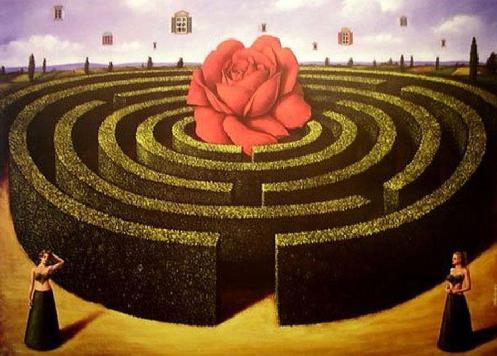
THE CRYPTOPORT 2010: In ancient Roman architecture, a “cryptoporticus” was a labyrinthine underground passage connecting all aspects of cultural life. Only partially at groundlevel, it supports a vast concealed architecture that communicates in secret among its numerous different centers. It is a matrix of nexus points. Many examples are found across Europe, but similar tunnels exist throughout Washington D.C. Literally, carved in stone, such large underground passageways are analogous to today’s underground bases, SAC, hardened survival bunkers, book depositories, archives, seed vaults, etc. The labyrinthine convolutions of today’s challenges mean we need to learn how to make our way through this tangled maze to “the Light at the end of the tunnel.” These holographic or virtual tunnels can be ‘mined’ for their informational value, helping us choose which way to go.

CRYPTOPORTICUS PRODUCTIONS is a transmedia venture, dedicated to revealing such underground connections among the control mechanisms of modern society. The cryptoporticus is also a vault in which are stored the secrets of cultural continuity – a failsafe for human survival technology.

We produce short socially-responsible documentaries on a variety of subjects about which we have first-hand knowledge. We demonstrate the value of such insider POV (points of view), and can direct and consult with production companies wishing to co-adventure, taking our content, proprietary knowledge and expertise to the next level of development and marketing. We have many rich themes ready for development. We are open to artistic and technical collaborations in visionary telecommunications, upon request and review. Our aim is social impact programming that awakens us, gives our beliefs a reality-check, and move us toward proactive change from the grassroots to global level.

Psi Spy

* MANKIND RESEARCH UNLIMITED
*
* TAVISTOCK AGENDA REVEALED
*
* SECRET WARS – COVERT ACTION REVELATIONS
*
* BLACK MAN IN THE CIA
*
* TRIPLE K ASSASSINATIONS
*
* COINTEL PRO FACTOR
*

* PSYOPS RITUAL PSYCHODRAMA
*

* OCCULT ESPIONAGE
*
* RETURN OF THE RUSSIAN AGENDA

Wired for Weirdness

Spooks really ARE spooky, even if they often stick to just one area of the paranormal. The nature of spying is looking for the ghost in the machine. They are as much or more fascinated by the Great Unknown than the general public and as likely to consult Edgar Cayce as Jane’s Intelligence Review.

How different is scenario modelling from foretelling the future? Remote Viewing at SRI was financed by CIA during the Cold War to the tune of $13M. With RVers, Precogs, AugCogs and electronic dope, no philosopher’s stone has been left unturned in the search for more intelligent intelligence. They quit trying to find it and retooled to invent it.

There are lots of smart people around, but what sets genius apart is its unflagging novel creativity. Genius isn’t something you are, but something you have or occasionally experience as it flows through as unique innovation or insight. The transformation from ordinary to extraordinary, by embodying your own genius, by hyperdimensionally supercharging your field body, is what esoterics is about. Naturally it has its own challenges and inherent rewards.

Esoterics changes your subjective point of view to the transpersonal observer self. For those who resonate and are attracted to the subject, the esoteric lure of mystery is as magnetic and compelling as any drug. Esoterics creates its own unique brain cocktail at every stage of the process/goal. Its addicts are as compulsive as any dope fiends, perhaps more so, since they haven’t created their own deprogramming or recovery programs.

We are driven and Mystery is at the heart of that drive, whether it is the esoterics of the occult, esoteric espionage, New Age philosophy, esoteric electronics, or the clandestine Great Game of spooks and kooks. The poison is the cure. Nothing is what it seems. Esoterics is a radically different point of view and level of observation. When you get there, you aren’t just “you.”

IONA MILLER

Meta Hari

MRU, LOA

“By 2007, my artistic medium changed: the world is my canvas; intelligence is my medium.” “If the world is my canvas, the palette is a shapeshifting morphology of belief systems and ideologies.” ~IO

“I’m the Carrie Bradshaw of conspirituality. Writing for NEXUS and PARANOIA is like writing for the Vogue and Cosmo of conspiracy, only with skeletons in the closet, not Manolo’s.” ~ Iona Miller, “Sects & the Siddhi”

Siddhis is the ancient mystic name for psychic phenomena. Mind expansion increases the potential of unusual powers. Personal power (chi, mana, prana) comes from libido, sexual and psychic energy. Sexual techniques (Tantra, Kundalini, Sex Magic, Taoist Alchemy) have been used in the east and west to raise amplitude in libido, to build energy charge. Yet, it is said that cultivating these powers is a distraction from Reality, from Enlightenment.

At the personal level, esoterics is the soft technology of self-development and change at the physical, emotional, mental and spiritual level. It means initiatory ordeals and challenging confrontations with yourself about the reality of nature and your own nature. To stay out on your personal edge means always being just a little off balance, at home in the chaos, alert to the resonating gaps in awareness.

Why are so many convinced esoterics is the panacea of post-postmodern life when it comes from a pre-technological era? Maybe new age philosophy is an Aquarian Conspiracy cooked up by the spychologists of Tavistock Institute, but Intelligence itself isn’t immune to its own psycho-babble propaganda and unconventional beliefs. The confluence of these two currents is the domain of ‘conspirituality.’

Have we been trained to “want to believe” by manipulating the same superstitious mindbody circuits exploited since neolithic shamanism by magicians and spies? Have we just built ourselves a bigger conceptual box with more wiggle room? Is The Secret of quantum mind really ‘out of the Schrodinger’s Box thinking’ or the latest manufactured meme? Can we really manifest a qualitativly higher level of our potential, individually and collectively? Then where are the Homo Lumen?

Cryptoporticus Productions

•November 15, 2009 • Leave a Comment

http://cryptoporticusproductions.iwarp.com

Film Consultation Panel

CRYPTOPORTICUS
“Light at the End of the Tunnel”

THE CRYPTOPORT: In ancient Roman architecture, a “cryptoporticus” was a labyrinthine underground passage connecting all aspects of cultural life. Only partially at groundlevel, it supports a vast concealed architecture that communicates in secret among its numerous different centers. It is a matrix of nexus points. Many examples are found across Europe, but similar tunnels exist throughout Washington D.C. Literally, carved in stone, such large underground passageways are analogous to today’s underground bases, SAC, hardened survival bunkers, book depositories, archives, seed vaults, etc. The labyrinthine convolutions of today’s challenges mean we need to learn how to make our way through this tangled maze to “the Light at the end of the tunnel.” These holographic or virtual tunnels can be ‘mined’ for their informational value, helping us choose which way to go.

CRYPTOPORTICUS PRODUCTIONS is dedicated to revealing such underground connections among the control mechanisms of modern society. The cryptoporticus is also a vault in which are stored the secrets of cultural continuity – a failsafe for human survival technology.

We produce short documentaries on a variety of subjects about which we have first-hand knowledge. We demonstrate the value of such insider POV (points of view), and can direct and consult with production companies wishing to co-adventure, taking our content, proprietary knowledge and expertise to the next level of development and marketing. We have many rich themes ready for development. We are open to artistic and technical collaborations, upon request and review.

CONTACT: Sophia or Charles Stone, 702-588-9058, Tiger News Service, Las Vegas, NV

“Turning the Inside Out”: Believable Experience Speaks for Itself

Ever wish you had first-hand, insider knowledge on cover ups, unsolved mysteries and exciting discoveries? This panel of patriotic activists and media consultants reveals crucial insights that dynamically connect the dots of hidden history with its reverberating effects. These ‘players’ share their dark secrets with the general public on geopolitics, covert activities, clandestine, blue sky and medical research, mind control, and more. They can address virtually every relevant hot topic of media or citizen inquiry.

Inspirational speaker, LEUTRELL OSBORNE, SR., one of the first African American Case Officers in the CIA, has appeared as an expert on CNN, BET and radio. His specialties include espionage, merging of intelligence with police, transnational crimes, civil rights, the Martin Luther King, Jr. assassination, drug wars, anti-covert action, and Cointel Pro-like domestic spying. Serving CIA for 27 years in the Cold War era, the spy manager supervised agents on three continents in 30 countries. Currently, Leutrell Osborne & Associates (LOA) provides security consulting, mentors aspiring Federal contractors, and promotes an Espionage Entertainment Enterprise (Dark Operative Series; Black Man in the CIA). CNN video – Black Man in the CIA: http://www.youtube.com/watch?v=YU0WVcbOTp4

Microbiologist, CHARLES STONE is an entrepreneur and investigator in Washington D.C., speaking and publishing internationally on weapons of mass destruction, pandemics, global mind control, biowarfare, WWII arcana, Constitutional rights, due process in education, health care reform, and other Federal operations. Freedom, accountability, fairness and Constitutionality are his issues. As Deputy Director of D.C. thinktank Mankind Research Unlimited (MRU), he worked with the Federal Government to apply innovative approaches to national problems including AIDS, drug and alcohol abuse, cancer and more. From the early ‘70s, MRU pioneered psychotronics, biocybernetics, biophysics, psycho-physiology, accelerated learning, psi and mind-body research.

Hypnotherapist, IONA MILLER is an artist, researcher and popular writer in future science, intelligence and esoterics. She analyzes the collective psyche and cultural effects of geopolitics, religion, science, art and psychology. The ‘spywhisperer’ has appeared in Nexus and Paranoia, authored several books and international publications. A futurist, analyst, MRU associate and LOA consultant, specialties of this “Meta Hari” include social engineering, pop culture, pop physics and psychology, media ecology, psi research, esoteric espionage, New Age critique, cults, PSYOPS, mind control countermeasures, creativity, mindbody, well-being, and extraordinary human capacities. (The Modern Alchemist; Magical & Ritual Use of Perfumes). Psychogenesis Art Video:

http://www.youtube.com/watch?v=Mc6r8BLyGBQ

Link Updates to Iona’s Classic and New Sites

•November 15, 2009 • Leave a Comment

TAVISTOCK AGENDA

http://tavistockagenda.iwarp.com

COLLECTIVE PSYCHE

http://collectivepsyche.iwarp.com

~ IONA’s CLASSICS ~

THE TRANSMODERN ALCHEMIST
transmodernalchemy.iwarp.com

HOLISTIC QABALA
http://zero-point.tripod.com/holistic/Holistic.html

PANTHEON – Gods/Goddesses
http://zero-point.tripod.com/pantheon/pantheon.html

Netzach Art Gallery
netzachartgallery.iwarp.com/

DREAMHEALING Process
dreamhealing.iwarp.com

TAO OF RESILIENCE
tao-of-resilience.iwarp.com

“Lost In Translation” UFOs
ufomeme.iwarp.com

Iona Miller’s Mystical Poetry
mysticpoetry.iwarp.com

SYNDEX I & II Number Mysteries

syndex2.iwarp.com/
syndex1.iwarp.com/

CREATIVE PROCESS
creativeprocess.iwarp.com

SPIRITUAL ALCHEMY
spiritualalchemy.iwarp.com

THE MODERN ALCHEMIST
the-modern-alchemist.iwarp.com

MAGICAL PERFUME BOOK
magicalperfume.iwarp.com

MYTHIC LIVING
mythicliving.iwarp.com

~SUPER SCIENCE~

Spiritual Physics
spiritualphysics.50megs.com

Virtual Physics
virtualphysics.50megs.com

My Zero Point
myzeropoint.50megs.com/

Photonic Human
photonichuman.50megs.com

EmBEDded Holograms
embeddedholograms.iwarp.com

Psiona Parapsychology
psiona.50megs.com

Beyond MK Ultra – MRU
beyondmkultra.50megs.com

Climate 2012
climate2012.50megs.com

Neurotheology
neurotheology.50megs.com

Paramedia Ecology
ionaparamedia.50megs.com

Biophysics
biophysics.50megs.com

Iona Brainstorm
ionabrainstorm.50megs.com

Electronic Voice Phenomena
evp2007.50megs.com

Espionage Central
espionagecentral.50megs.com

Occult Espionage
occultespionage.50megs.com

Mind Control for Dummies
mindcontrolfordummies.50megs.com

Bacon is Shakespeare
baconisshakespeare.50megs.com

Triangle Book of St. Germain
trianglebook.50megs.com

~ SOUL SUPPORT~

Conscious Alchemy
consciousalchemy.50megs.com

Creativity
creativeprocess.iwarp.com

Chaosophy Journal
chaosophy.50megs.com

The Modern Alchemist Book
the-modern-alchemist.iwarp.com

Temple of Living Light
templeoflivinglight.50megs.com

Emergent Healing
emergenthealing.50megs.com

Edgeworks Hypnosis
edgeworkshypnosis.50megs.com

Mythic Living
mythicliving.iwarp.com

Harmonic Continuum
harmoniccontinuum.50megs.com

Synergetic Qabala
synergeticqabala.iwarp.com

Magical Perfume Book
magicalperfume.iwarp.com

Energy Psychology
energypsychology.50megs.com

Dreamhealing Book
dreamhealing.iwarp.com

Spiritual Alchemy SuperPortal
spiritualalchemy.iwarp.com

We all know that art is not the truth, art is a lie that makes us realize the truth. ~Picasso

~IO ART~
IONATOPIA 2007: ionatopia.50megs.com
IONASPHERE 2000: ionamiller.org

Pop Occulture
popocculture.50megs.com

Know Brow Art
knowbrowart.50megs.com

Digital Universe
digitaluniverse.50megs.com

Kabbalah Luminata
kabbalahluminata.50megs.com

Science-Artificers Guild, Int’l
science-artificer.iwarp.com

Science-Art Renaissance
science-art-usa.50megs.com

Sacred Geometry
sacredgeometry.50megs.com

Iona Miller
ionamiller.50megs.com

Iona Miller Art
ionamillerupdates.50megs.com

ESPIONAGE SERIES

The Spywhisperer
spywhisperer.iwarp.com

Espionage Central
espionagecentral.50megs.com

Occult Espionage
occultespionage.50megs.com

Mind Control for Dummies
mindcontrolfordummies.50megs.com

Beyond MK Ultra – MRU
beyondmkultra.50megs.com

Psiona Parapsychology
psiona.50megs.com

Paramedia Ecology
ionaparamedia.50megs.com

Homepage

•November 15, 2009 • Leave a Comment

Iona Miller Homepage
http://ionamiller.iwarp.com
Cryptoporticus Productions

http://cryptoporticusproductions.iwarp.com

Mankind Research Unlimited Psi Research

•November 12, 2009 • Leave a Comment

The Paranormal Power

In 1973, the international expose PSYCHIC DISCOVERIES BEHIND THE IRON CURTAIN by Shiela Ostrander & Lynn Schroeder became a best-seller. Former Naval Intelligence Officer, Dr. Carl Schleicher actively wondered why the U.S. had no comparable program in psychotronics, where esoterics meets science. He resolved to create one, recruited authors Ostrander & Schroeder to turn over their untranslated data, and began collecting researchers and creating experimental protocols. Thus, in 1973, Mankind Research Unlimited (MRU) in Washington D.C. was born as a private company, seeking government and corporate contracts.

The irony of this Cold War era, is that the Soviets thought we were using psychic spies, so they began their program, which in turn sparked actual US interest, based on their claims of success. Soviet interest in psi was piqued in February 1960 by a story in the French magazine Science et Vie (Science and Life) entitled “The Secrets of the Nautilus.” It claimed that the US government secretly used telepaths to communicate with the first nuclear submarine, the Nautilus, while it was under the Arctic ice pack. This telepathy project allegedly involved President Eisenhower, the Navy, the Air Force, Westinghouse, General Electric, Bell Laboratories and the Rand Corporation.

Communicating with submarines is difficult as radio waves do not penetrate to the depths of the ocean. Extremely low frequency (ELF) waves are used to signal the submarine to come to the surface to receive a message. These super-long waves penetrate almost anything including water but carry little information. If telepathy could work it would be a perfect method of communicating with submerged submarines. The story was probably a propaganda hoax but the Soviets were spurred into action.

The Cold War among psychic spies is recounted in James Mills’ book THE POWER (1990), which is loosely based on MRU’s principle spyentist, “KT,” a longterm advisor to Dr. Schleicher and Joint Chiefs of Staff. The fictional Jack Hammond is a scientific intelligence officer for the Monday Afternoon Group, America’s top secret paranormal research unit, employing occult forces for intelligence and military objectives. As Mills notes, “The most terrifying weapon lies in the darkest regions beyond the human mind.”

Blue Sky research became of interest to both the government and private sector. It spread from R&D thinktanks into the open-minded counterculture then to the mainstream. Along the way, these revolutionary ideas became the obsession of spooks, spyentists, spycologists, psychedelic physicists and a whole host of fringe characters and psychics. Psychotronic researchers broke through the Iron Curtain and brought their discoveries to the West. Many world-class scientists and engineers passed through the threshold of MRU.

Technovelties

Blue sky projects that begin as implausible can produce incremental advances that eventualy result in applied technologies, even if it takes decades. It is bottom-up versus top-down research. Bottom-up means exploring from the known to the unknown, seeing if there are any serendipitous opportunities that emerge. By its nature, bottom-up work is unpredictable, based in some kind of intuition.

Top-down means problem directed, oriented to solving a problem. The reality dimension, how realistic the project is, shows up independently for either. Some bottom-up projects are highly realistic, other top-down projects are somewhat unrealistic. No one knows in advance which research directions will deliver.

We now take for granted many once-magical technologies even better than those in sci-fi space operas that emerged from the inspiration of the “Star Trek philosophy.” It became Dr. Schleicher’s policy not to dismiss any outlandish idea for fear of missing some breakthrough. That led to a wide scope of blue sky investigation.

Defense Advanced Research Projects Agency (DARPA), founded in 1958 when the Soviets launched Sputnik, is the Pentagon’s autonomous Blue Sky agency. Such projects are still conducted behind closed doors by DARPA, who’s “holy grail” is cracking the the brain’s code to build a brain-computer interface.

Many dark chapters in brainwashing and mind control have been written since Tavistock Institute of Human Relations began its massive social engineering program after WWII and teamed with CIA to deploy nefarious experimental programs, such as MK Ultra. There is a Defense Intelligence Agency (DIA) Psychic Center and the NSA (National Security Agency) studies parapsychology, that branch of psychology that deals with the investigation of such psychic phenomena as telepathy, clairvoyance, extrasensory perception, and psychokinesis. They also did experiments where the mind of one person controlled the bodies of others.

The Dark Side

One project led by Dr. Peter G. Bourne, aimed at creating a psychocybernetic “cyborg” or remotely controlled assassin as depicted in the classic “Manchurian Candidate,” “Telephon,” and the Jason Bourne series. Controllers pull the post-hypnotic trigger and the subject commits a murder with no memory of the incident. Some of these CIA mind control projects used the public as unwitting guinea pigs exposed to drugs, infectious agents and toxic psychiatry. Many projects became public during 1975 Congressional investigation by the Church Committee. Surrepetitious research continued, farmed out to subcontractors who were not accountable under the Freedom of Information Act (FOIA).

In the 1970’s, clandestine programs were conducted at Standford Research Institute (SRI) in Remote Viewing. In the 1980s, the Army applied it militarily in the New Earth Battalion, (“Be all that you can be”), subject of the 2009 movie, “Men Who Stare At Goats.” Likewise Special Forces, such as Navy Seals, began using paranormal ESP training for rapid intuitive decision-making in the field, and more. One of Dr. Schleicher’s earliest experiments involved dowsing — not for ‘witching’ a water well, but to find and trace Vietcong tunnels and tunnel rats.

Promising Potential

Astronaut Edgard Mitchell, who did his own telepathy experiment from the dark side of the Moon, founded the Institute of Noetic Science (IONS) in 1973. It explores different ways of “knowing,” including spiritual practices and exploration of transformative relationships. IONS prominent role in Dan Brown’s 2009 best-seller, THE LOST SYMBOL, is fixing the meaning of ‘noetic science’ in the public imagination. The Esalan Physics Consciousness Group was founded at the same time by fellow scientists Jack Sarfatti, Nick Herbert, Saul-Paul Sirag, and Fred Alan Wolf, to investigate The Fringe by studying frontier science subjects such as time travel, consciousness after death, and ESP.

MRU alumni, Uri Geller with his ESP and spoonbending parlour tricks captured the public imagination and led to crazes in firewalking and other demonstrations of extraordinary human potential. Few in the public understood the spectrum of psychotronics or noetics, but the old mechanical model of the mindbody relationship died and a new model based in psi, mind-body healing and subtle energies emerged aimed at developing innate human potentials and creative capacity. Boundaries between inner and outer experience collapsed.

The new consciousness paradigm opened our culture to the holistic world of complementary medicine, the human potential movement and the idea that we, too, could participate directly in the mysteries of nature and Cosmos. The premise was that the strangest phenomena have the most to teach us about science and ourselves. New interdisciplinary specialties in parapsychology, biophysics, accelerated learning and alternative medicine emerged. MRU was at the forefront of this cultural revolution, which promised transformational breakthroughs in personal and collective consciousness, integral healing and a new worldview. The fascinating history of early psi research is summarized by Jeffrey Mishlove in his classic The Roots of Consciousness, and in this site at http://mankindresearchunlimited.iwarp.com/whats_new_16.html

Many MRU associates went on to produce early classics in paranormal literature, such as Dr. Stanley Krippner, who included work by other MRU scientists in his ground-breaking books:

Galaxies of Life: The Human Aura in Acupuncture and Kirlian Photography (with Daniel Rubin). Gordon & Breach, 1973.

Dream Telepathy: Experiments in Nocturnal Extrasensory Perception (with Montague Ullman, M.D. and Allan Vaughan). 1973.

The Kirlian Aura: Photographing the Galaxies of Life (with Daniel Rubin). Garden City, NY: Anchor Books, 1974.

The Energies of Consciousness: Explorations in Acupuncture, Auras, and Kirlian Photography (with Daniel Rubin). New York: Gordon & Breach, 1975.

Future Science: Life Energies and the Physics of Paranormal Phenomena (with John White). Garden City, NY: Anchor Books, 1977.

PSIentists who stare at goats…backstory

•October 24, 2009 • Leave a Comment

http://www.huffingtonpost.com/2009/10/23/george-clooney-in-the-men_n_328682.html

Tavistock Timeline of Culture

•October 19, 2009 • 1 Comment

“Who controls the past, controls the future: who controls the present, controls the past.” -George Orwell

BRITISH MIND CONTROL: Principles of modern psychology originated in esoterics which is also the root of modern espionage and intelligence psyops, as well as parapsychology. Magic and religion has been employed to control populations since the dawn of written history. In military terms psychic operations are called psychotronics.

Adversaries are rogue psi operatives, psiwarriors who battle like sorcerers. Psychic self defense employs thought disruption, shielding techniques, mind drain and energy manipulation. Psionics is scientific magic ~ magecraft, the product of extraordinary human potential. Precogs, like analysts, are attuned to the future. Deep Cover They understand viscerally that things are often not what they seem. Both are masters of disguise, the hidden environment, intelligence, espionage, and covert action. Both aim to ‘tweak the timeline’ with small perturbations that pump up to macroscopic results, setting up currents of intentional influence. They also tweak minds by controlling the environment. No one can resist what they cannot detect.

Both are Inside Outsiders, working at the fringes of the System. The “outsider” aesthetic is charged by a desire to break free from the contrivances of tradition. They look boldly outside the system and deep within themselves for inspiration that arises directly from Creative Source. Both work sub rosa. This phrase comes from the Latin meaning ‘under the rose’ for confidentiality, black ops. It comes from the Masonic fraternal tradition. The rose is the emblem of Horus, God of Silence and Secrecy; the Tudor Rose shares the same root.

*****

300 – 400 B.C. One of Plato’s tricks was “forbidding the question.” His Republic is a blueprint for tyrannical systemic philosophical control. ‘The Big Lie,’ a hypnotic propaganda technique, is rooted in Plato’s ‘Noble Lie,’ the myth knowingly told by the elite to maintain social control. The lie is different at the physical, emotional, mental and spiritual levels.

1559 John Dee (1527-1608): Wizard, Magus and Spymaster is the historical root of British intelligence operations, political assassinations and cryptography.

Freemasonry, a secret society and fraternal organization arose from obscure origins in the late 16th to early 17th century. Freemasonry now exists in various forms all over the world, with a membership estimated at around 5 million, including just under two million in the United States and around 480,000 in England, Scotland and Ireland.The various forms all share moral and metaphysical ideals, which include, in most cases, a constitutional declaration of belief in a Supreme Being. Extensive research and use of occult symbolism and initiatory rites.

1601 British East India Company – colonial monopoly, military expansionism, opium trade (1773-1842 First Opium War

ENLIGHTENMENT: There is no consensus on when to date the start of the age of Enlightenment, and some scholars simply use the beginning of the eighteenth century or the middle of the seventeenth century as a default date. If taken back to the mid-1600s, the Enlightenment would trace its origins to Descartes’ Discourse on the Method, published in 1637. Others define the Enlightenment as beginning in Britain’s Glorious Revolution of 1688 or with the publication of Isaac Newton’s Principia Mathematica. Scholars date its end in the French Revolution of 1789 or Napoleonic Wars (1804-15)

1623 Sir Frances Bacon, head of the Rosicrucians and Freemasons, expressed his aspirations and ideals in New Atlantis. Released in 1627, this utopian novel was his creation of an ideal land where “generosity and enlightenment, dignity and splendor, piety and public spirit” were the commonly held qualities of the inhabitants of Bensalem. In this work, he portrayed a vision of the future of human discovery and knowledge. The plan and organization of his ideal college, “Salomon’s House” (or Solomon’s House), envisioned the modern research university in both applied and pure science. He sent secret society members to the new world shortly after the Pilgrims to launch the esoteric empire through a colonization scheme.

1776 American Revolution The original visionary imprint of what became the United States of America came from Francis Bacon, who was one of the great mystics of the late 16th and early 17th centuries. He wrote a book right before he died that was unpublished because he died very soon thereafter, called New Atlantis. He believed and asserted that the North American Indians were the survivors and descendants of the original Atlantean civilization, and he called to mind that Atlantis had risen to global power and then been destroyed because of its hubris. So whatever was going to be built in North America would be Atlantean in its basic archetypal pattern and destiny path, and at some point it was going to rise to the level global dominion. Then it would, like ancient Atlantis, have to make a choice between power for the sake of service and power for the sake of more power, and as it decided, the fate of the world would be determined.

Many of the founding fathers of the United States, George Washington, Benjamin Franklin, James Madison, etc., were Masons and Rosicrucians. They were all students of Bacon. They believed they were creating the new Atlantis, the new Israel, the new Rome, the new Athens, and they consciously set forth to build a nation around light and power. On the back of a dollar bill is the pyramid and the all-seeing Eye of Horus. We were born out of a mystical vision of human perfection that was basically Atlantean in its impulse. So the challenge today is to reconnect with the Wisdom Tradition that gave rise to Atlantis, that gave rise to the United States of America, and that is ultimately an esoteric pursuit. The issue is not whether there was a real Atlantis or not, the issue is the mythic force and worldview behind that claim. America was to be Atlantean — imperial, global, beyond imagination in scope and power. The Fathers pioneered a new depth wand expansiveness worldcentric in nature. They unraveled all hierarchies with “elite egalitarianism”, enlightened self-interest, gentry class, Atlantean vision. The egalitarian elements: human rights, political freedoms, and the republic have been undermined by Tavistock which has led us astray with an appearance of freedom.

1813 “The Great Game” described strategic rivalry between British and Russian empires for supremacy in Central Asia, from 1813 – Russo-Perisan Treaty of 1813 and 1907, to Bolshevik Revolution of 1917. Popularized by Kipling in the novel Kim (1901).

1875 Theosophical Society, Madame Blavatsky

1879 At Leipzig University in 1879, Wilhelm Wundt established the first psychological laboratory, and among his students were Ivan Pavlov, William James (the “Father of American Psychology”), and G. Stanley Hall (who would become the mentor of John Dewey, the “Father of Progressive Education”). Pavlov is well-known for his stimulus-response experiments with dogs. In Clarence Karier’s SCIENTISTS OF THE MIND (1986), one reads concerning James that “we pass from a culture with God at its center to a culture with man at its center.”

1882 Society for Psychical Research in London

1884 Fabian Society. Utopian socialism. George Bernard Shaw, H. G. Wells, Annie Besant, Graham Wallas, Hubert Bland, Edith Nesbit, Sydney Olivier, Oliver Lodge, Leonard Woolf and Virginia Woolf, Ramsay MacDonald and Emmeline Pankhurst.

1885 The American Society for Psychical Research (ASPR) was founded in 1885 by a distinguished group of scholars and scientists who shared the courage and vision to explore the uncharted realms of human consciousness, among them renowned Harvard psychologist and Professor of Philosophy, William James. Many of the early participants were pioneers in psychology, psychiatry, physics and astronomy. Freud and Jung were honorary members. Luminaries from a wide range of disciplines have been drawn to the Society throughout its history, including Chester Carlson, the inventor of Xerox; quantum physicist, David Bohm; psychologist Gardner Murphy; and dream researcher Montague Ullman, M.D.

1886 Freud begins psychoanalytic practice with “talking cure,” based in unconscious, subconscious, dreams, hypnosis, repression, phobias, psychosexual development, personality and behavior, dissociation, amnesia, sublimation, conversion reaction, defense mechanism, denial, repression, displacement. In the early 1890s Freud used a form of treatment based on the one that Breuer had described to him, modified by what he called his “pressure technique” and his newly-developed analytic technique of interpretation and reconstruction. Freud practiced clinical hypnosis from roughly 1886-1900 and linked it to transference. Ego, Super-ego, Id. Eros & Thanatos.

The “talking cure” became the signature of the “Tavistock Method,” and a blanket solution (with psychotropic drugs) to mental distress.
Defense mechanisms include acting out, autistic fantasy, denial, devaluation, displacement, dissociation, idealization, intellectualization, isolation, passive aggression, projection, rationalization, reaction formation, repression, somatization, splitting, suppression, and undoing. The therapist handles them with bypassing, reassurance, distraction, confrontation, interpretation, or changing vantage point or scope.

1888 Secret Doctrine by Blavatsky

1904 – 1913 Freud – Jung training relationship. Amongst the thinkers who are held to have set the stage for transpersonal studies are William James, Carl Jung, Abraham Maslow [peak experience], and Roberto Assagioli (Miller, 1998: 541-542.) Research by Vich (1988) suggests that the earliest usage of the term “transpersonal” can be found in lecture notes which William James had prepared for a semester at Harvard University in 1905-6.

1909 Secret Intelligence Service, (SIS) MI6 British Intelligence. Freud and Jung visit William James in America.

1913 Jung breaks with Freud with libido theory, including collective unconscious, mysticism, occult and mythic psychic archetypes, free association. Plato said that “true philosophers make dying their profession,” referring to the wisdom inherent in this process. What is natural and instinctual is allowed to die and transform. Where Freud saw a life/death struggle, Jung saw a death/rebirth mystery of cyclic passages and renewal, later called ‘creative regression.’

1914 – 1918 WWI. 1914 – Wellington House Propaganda Bureau, Tavistock precursor. After discovering that Germany had a Propaganda Agency, a British War Propaganda Bureau was set up at Wellington House, the London headquarters of the National Insurance Commission, with Masterman as chairman. Masterman invited 25 leading British authors to Wellington House to discuss ways of best promoting Britain’s interests during the war. Those who attended included William Archer, Arthur Conan Doyle, Arnold Bennett, John Masefield, Ford Madox Ford, , G. K. Chesterton, Henry Newbolt, John Galsworthy, Thomas Hardy, Rudyard Kipling, Gilbert Parker, G. M. Trevely and H. G. Wells. The project stay secret until 1935. Several of the writers agreed to write pamphlets and books promoting the government’s point of view. The War Propaganda Bureau published over 1,160 pamphlets during the war. Report On Alleged German Outrages published by 1915.

1919 Freud’s double nephew mass manipulator Edward Bernays, Tavistock Director, combines work of Freud and others on mass psychology to establish promotion, advertising, Public Relations PR industry. Propaganda techniques were first codified and applied in a scientific manner by journalist Walter Lippman and psychologist Edward Bernays (nephew of Sigmund Freud) early in the 20th century. During World War I, Lippman and Bernays were hired by then United States President, Woodrow Wilson, to participate in the Creel Commission, the mission of which was to sway popular opinion in favor of entering the war, on the side of Britain. Edward Bernays said in his 1928 book Propaganda that, “The conscious and intelligent manipulation of the organized habits and opinions of the masses is an important element in democratic society. Those who manipulate this unseen mechanism of society constitute an invisible government which is the true ruling power of our country.”

1920 – Tavistock Institute of Medical Psychology, under Brigadier-General John Rawlings Rees researches human breaking point and psychological warfare — mass manipulation by psychological shock.

In the period following the War To End All Wars, Viennese witch doctors came to realize that neurotic disabilities were endemic and pervasive in a modern society. The Tavistock Institute of Medical Psychology (Tavistock Clinic) was founded in 1920 in order to take advantage of these neuroses and develop manipulative procedures.

The founding group included physicians, neurologists, psychiatrists, anthropologists and socioliogists, Interest focussed on “dynamic psychologies”. On the one hand were the adherents of Freud, Jung and Adler. On the other were a neurologically-oriented general psychiatry, a somatically-oriented general medicine and a surrounding subject population.

Key figures included Jack Rawlings-Rees, Henry Dicks, Ronald Hargreaves, Tommy Wilson and Wilfred Bion. The Clinic began to take on a conceptual direction consonant with the emergent ‘object relations approach’ in psychoanalysis. The object relations approach emphasized relationships rather than instinctual drives and psychic energy.

1921 – The 11th Duke Tavistock donates a building for Tavistock Clinic to study the effects of shellshock. The Council on Foreign Relations (CFR) was formed in New York City as an American nonprofit and nonpartisan membership organization dedicated to improving the understanding of U.S. foreign policy and international affairs. With an additional office in Washington D.C., CFR is considered to be ‘the most influential foreign-policy think tank.” It convenes tasks forces and meetings at which government officials, global leaders and prominent members of the foreign policy community discuss major international issues. Its think tank, the David Rockefeller Studies Program, is composed of about fifty adjunct and full-time scholars, as well as ten in-resident recipients of year-long fellowships, who cover the major regions and significant issues shaping today’s international agenda. These scholars contribute up-to-date information and analysis for the foreign policy debates by making recommendations to the presidential administration, testifying before Congress, serving as a resource to the diplomatic community, interacting with the media, authoring books, reports, articles, and op-eds on foreign policy issues. CFR publishes Foreign Affairs, “the preeminent journal of international affairs and U.S. foreign policy.”

1923 – 1930s Liepzig School – Frankfurt School, Institute for Social Research (Freudian Theory, Marxist Theory, Critical Theory)

1926 Anna Freud lectures at Tavistock.

1928 H.G. Wells publishes “The Open Conspiracy”; “Manipulating Public Opinion” and “The Business of Propaganda” by Edward Bernays

1930 Humanist, pacifist Aldous Huxley (Brave New World, 1932) takes mescal in Berlin with magician Aleister Crowley heralding psychedelics, counterculture, and occulture. Grandson of Darwinian biologist Thomas Henry Huxley, who influenced H.G. Wells. Crowley claimed to have met Blavatsky and required students to read her.

1932-1933 Director Kurt Lewin exchanged theories with Eric Trist of Tavistock Clinic before moving to America. Lewin emigrated to the United States in August 1933 and became a naturalized citizen in 1940. He went on to become director of the Center for Group Dynamics at MIT. At Tavistock, German refugee, Kurt Lewin originated the anti-Germany propaganda campaign to “turn the American public against Germany and involve us in World War II.

John Rawlings Rees (who would be a co-founder of the World Federation for Mental Health in 1948) was Deputy Director of Tavistock at this time (he would become Director in 1932). Rees developed the “Tavistock Method,” which induces and controls stress via what Rees called “psychologically controlled environments” in order to make people give up firmly held beliefs under “peer pressure.”

Rees’ Tavistock Method was based on work done by British psychoanalyst Wilfrid Bion regarding the roles of individuals within groups. This design was later shifted in a series of conferences (1957-1965) led by A. Kenneth Rice, chairman of Tavistock’s Centre for the Applied Social Research. The shift was to the dynamics of leadership and authority relations in groups.

Wilhelm Reich wrote The Mass Psychology of Fascism. Reich wrote, “Fascism is only the organized political expression of the structure of the average man’s character. It is the basic emotional attitude of the suppressed man of our authoritarian machine civilization and its mechanistic-mystical conception of life.” Reich thought we are all potentially fascist. But his theory was rooted in repression, not raw power motives. He predicted commodification of the body image and the development of consumer identity through the corruption of human sexuality.

1933 Humanist Manifesto. On April 11, 1933, Rockefeller Foundation president Max Mason assured trustees that in their program, “the Social Sciences will concern themselves with the rationalization of social control,… the control of human behavior”

1935 – Psychoanalysis is “all the rage” in London. Jung’s Tavistock Lectures on the structure of the psyche. typology, archetypes, mythemes, shadow. By 1935, Jung is at Tavistock Clinic with Wilfred Bion, delivering five theory and practice lectures in analytical psychology on the deep nature of the psyche, including the collective unconscious and autonomous ‘complexes’ of painful, traumatic yet compelling character. We also call them subpersonalities. He lectured on the dreams and visions of physicist Wolfgang Pauli. In 1935, Harvard psychologist (1930-1967) Gordon Allport co-authored THE PSYCHOLOGY OF RADIO with Hadley Cantril. Allport would be a leading agent in the U.S. for the Tavistock Institute, and Cantril in 1937 would be a member of the Rockefeller Foundation-funded Office of Radio Research at Princeton University established to study the influence of radio on different groups of listeners.

1936 “The Office of Population Research was founded in 1936 when Frederick H. Osborn ‘10, a charter trustee of Princeton, formerly a trustee at the Milbank Memorial Fund, used his good offices with both of these institutions to persuade the University to found a program in teaching and research in population, and the Milbank Fund to provide much of the initial financing. Osborn, later a major general during World War II, appointed to study and foster improvement in the morale of the armed services, had a deep interest in population matters, as well as in his alma mater.” “The Office of Population Research at Princeton University is the oldest population research center in the country. Founded in 1936, it has trained more than a hundred students who received doctoral degrees and more than a hundred others who received one-year professional training. Many of these alumni occupy important professional positions in developing countries; others are on university faculties in this country and abroad.” -A Princeton Companion

1938 OSS General Donovan was indoctrinated and ‘processed’ at Tavistock. After obtaining his medical qualification Wilfred Bion spent seven years in psychotherapeutic training at the Tavistock Clinic, an experience he regarded, in retrospect, as having had some limitations. It did, however, bring him into fruitful contact with Samuel Beckett. He wanted to train in Psychoanalysis and in 1938 he began a training analysis with John Rickman, but this was brought to an end by the Second World War. In the Army Medical Corps he got ideas about psychoanalysis of groups. The entire group at Tavistock had in fact been taken into the army, and were working on new methods of treatment for psychiatric casualties (those suffering post-traumatic stress, or ’shell shock’.)

1939 WWII begins. The New World Order published by H.G. Wells. Freud is Tavistock Director, follwed by daughter Anna Freud. Tavistock mocked as “Freud Hilton.”

1940 Rees went even further than this on June 18, 1940 at the annual meeting of the National Council for Mental Hygiene of the United Kingdom. In his speech on “Strategic Planning for Mental Health,” he proclaimed: “We can therefore justifiably stress our particular point of view with regard to the proper development of the human psyche, even though our knowledge be incomplete. We must aim to make it permeate every educational activity in our national life…. We have made a useful attack upon a number of professions. The two easiest of them naturally are the teaching profession and the Church: the two most difficult are law and medicine…. Public life, politics and industry should all of them be within our sphere of influence…. If we are to infiltrate the professional and social activities of other people, I think we must imitate the Totalitarians and organize some kind of fifth column activity! If better ideas on mental health are to progress and spread we, as the salesmen, must lose our identity…. Let us all, therefore, very secretly be ‘fifth columnists.’” (See MENTAL HEALTH, Vol. 1, No. 4, October 1940)

In 1940, Cantril would author THE INVASION FROM MARS: A STUDY IN THE PSYCHOLOGY OF PANIC regarding the radio broadcast of H.G. Wells’ THE WAR OF THE WORLDS. Tavistock senior staffer, Fred Emery, would later (HUMAN RELATIONS, Vol. 12, No. 3, August 1959) begin his article on “Working Hypotheses on the Psychology of Television” with the words: “The psychological after-effects of television are of considerable interest to the would-be social engineer.”

1942: The Office of Strategic Services (OSS), wartime precursor to CIA, begins searching for a drug that will force subjects of interrogation, such as captured Nazi U-boat crews, to reveal secrets. As project director Dr. Stanley Lovell will recall, the idea of a “truth drug” is “considered fantastic by the realists, unethical by the moralists, and downright ludicrous by the physicians.” But according to OSS records, Lovell goes ahead and tests “mescaline, various barbiturates, scopolamine, benzedrine, cannabis indica (marijuana), etc.” The best results are obtained with the marijuana: “A few minutes after administration, the subject gradually becomes relaxed, and experiences a sensation of well-being… thoughts flow with considerable freedom… conversation becomes animated and accelerated. Inhibitions fall away…. [the drug] makes manifest any strong characteristics of the individual…. Whatever the individual is trying to withhold will be forced to the top of his subconscious mind.” To “administer” the pot without a subject’s knowing it, OSS scientists dissolve marijuana leaves in acetone, then heat the result into a clear, odorless, viscous liquid — tetrahydrocannabional acetate — which can be “injected into any type of food, such as mashed potatoes, butter, salad dressing, or in such things as candy.”

1943 LSD developed by Albert Hoffman, a chemist at Sandoz A.B. – a Swiss pharmaceutical owned by banker, S.G. Warburg. [He’s a Federal Reserve shareholder]. British and U.S. intelligence were directly involved.

The Glass Bead Game or Magister Ludi (Master of the Game) is the last work magnum opus of the German author Hermann Hesse. Begun in 1931 and published in Switzerland in 1943, the book was mentioned in Hesse’s citation for the 1946 Nobel Prize for Literature. “Magister Ludi” can also be seen as a pun lud- is a Latin stem meaning both “game” and “school.”

1944 The International Monetary Fund was created in July 1944, originally with 45 members, with a goal to stabilize exchange rates and assist the reconstruction of the world’s international payment system. Countries contributed to a pool which could be borrowed from, on a temporary basis, by countries with payment imbalances. (Condon, 2007)

During the Second World War, Tavistock was part of Great Britain’s Psychological Warfare Department. On May 7, 1944, Dr. Rees of Tavistock and the British War Ministry injected Nazi prisoner Rudolf Hess with the narcotic Evipan. According to Lt. Col. Eugene Bird in PRISONER NO. 7: RUDOLF HESS (in the chapter titled “A Secret Drug”), Rees examined Hess 35 times. Rees and his associates via chemicals caused Hess’s memory to fail and then “explained that they could bring back the memory with an injection of Evipan.” Hess was told that “while under its influence he would remember the past he had forgotten.”

1945 (-1991) Cold War. World Federation for Mental Health

1946 – 1947 Rockefeller grant funds the Tavistock Institute of Human Relations (London), as a not-for-profit organization for social psychiatry, group and organizational behavior research. Psychiatrist, Wilfred Bion, founding member, specialty group psychotherapy, group dynamics. OSS becomes CIA using Tavistock guidelines. Their redefined social mission was called Operation Phoenix. There were four divisions of staff members: consultants, principal project officers, project officers and assistant project officers. The grand strategy is the overall approach to winning the perpetual war – prosecuting the direct and indirect (covert) agenda.

National Training Laboratories, Bethel, Maine. Human Relations journal. “[The] National Training Laboratories… operation revolves around the particular form of Tavistock degenerate psychology known as ‘group dynamics,’ developed by German Tavistock operative Kurt Lewin…In a Lewinite brainwashing group, a number of individuals from varying backgrounds and personalities, are manipulated by a ‘group leader’ to form a ‘consensus’ of opinion, achieving a new ‘group identity.’ The key to the process is the creation of a controlled environment, in which stress is introduced (sometimes called dissonance) to crack an individual’s belief structure. Using the peer pressure of other group members, the individual is cracked, and a new personality emerges with new values. The degrading experience causes the person to deny that any change has taken place…

Mass production of TV sets. Benjamin Spock Commonsense Book of Child Care.

1947 While working with at MIT in 1946, Lewin received a phone call from the Director of the Connecticut State Inter Racial Commission requesting help to find an effective way to combat religious and racial prejudices. He set up a workshop to conduct a ‘change’ experiment, which laid the foundations for what is now known as sensitivity training. In 1947, this led to the establishment of the National Training Laboratories, at Bethel, Maine. Carl Rogers believed that sensitivity training is “perhaps the most significant social invention of this century.” Following WWII Lewin was involved in the psychological rehabilitation of former occupants of displaced persons camps with Dr. Jacob Fine at Harvard Medical School. When Eric Trist and A T M Wilson wrote to Lewin proposing a journal in partnership with their newly founded Tavistock Institute and his group at MIT, Lewin agreed. The Tavistock journal, Human Relations, was founded with two early papers by Lewin entitled “Frontiers in Group Dynamics”. Lewin taught for a time at Duke University.

1948 Tavistock joined with Kurt Lewin’s Research Center for Group Dynamics (RCGD) at the University of Michigan the next year and begin disseminating human relations literature, relating theory to practice, including promotion of change, engineering consensus, mass persuasion, breakdown of cognitive structure, and overcoming resistance.

Concept of ‘world citizenship’ proposed at 3rd International Congress of Mental Hygiene. B.F. Skinner publishes Walden Two; Alfred Kinsey publishes Sexual Behavior in the Human Male. World Federation for Mental Health founded 1948 by John Rawlings Rees (Margaret Mead, President 1956-57).

James Paul Warburg, son of Paul Warburg who wrote the Federal Reserve Act, and nephew of Max Warburg who had financed Hitler, set up the Institute for Policy Studies to promote [LSD]… and the New Left counter-culture.”

RAND thinktank develops from Air Force Project RAND. The Prisoner’s Dilemma of game theory (originally framed at RAND in 1950 as a Cold War strategy) frames paradoxes in self-interest. There is a higher payoff in betrayal than cooperation. The iterated prisoner’s dilemma has also been referred to as the “Peace-War Game.” Without a doubt, RAND is THE think tank most beholden to Tavistock Institute and certainly the RIIA’s most prestigious vehicle for control of United States policies at every level. Specific RAND policies that became operative include our ICBM program, prime analyses for U.S. foreign policy making, instigator of space programs, U.S. nuclear policies, corporate analyses, hundreds of projects for the military, the Central Intelligence Agency (CIA) in relation to the use of mind altering drugs like peyote, LSD (the covert MK-ULTRA operation which lasted for 20 years). BRAINWASHING remains the primary function of RAND.

In 1948, the British government formed an Industrial Productivity Committee which had a Human Factors Panel. This made grants for research aiming to secure improved productivity through better use of human resources. The grants were administered by the Medical Research Council.

Tavistock used these grants to develop techniques to integrate management and labor and integrate different levels of management; to restructure society in order to raise productivity; and to pioneer a new form of post-graduate education for field workers in applied social research.

Further experiments in manipulation were carried out in Ahmedabad, Pakistan; with Unilever; in the manufactured food industry to promote “pleasure foods” with little or no nutritional value, consumed excessively to satisfy oral cravings and reduce anxiety. Areas of study included ice cream, candy, smoking and alcohol. Private industry consultations supplemented Rockefeller support and extended the reach of the Institute. The Institute developed ever larger research and training programs, with increasing support from US foundations.

1949 ‘1984′ by George Orwell. The year after Tavistock and the RCGD began publishing HUMAN RELATIONS, the journal (Vol. II, No. 3, 1949), published “Some Principles of Mass Persuasion” by Dorwin Cartwright who helped establish the Institute for Social Research at the University of Michigan. In this article, Cartwright reveals: “It is conceivable that one persuasive person could, through the use of mass media, bend the world’s population to his will.” The article goes on to describe “the modification of cognitive structure in individuals by means of mass media” and how “a person can be induced to do voluntarily something that he would otherwise not do.” The article also provides “a list of essential requirements for the success of any campaign of mass persuasion.”

1950 Korean War brainwashing exposed. Maoist techniques techniques included, dehumanizing of individuals by keeping them in filth, sleep deprivation,, partial, sensory deprivation, psychological harassment, inculcation of guilt, group social pressure. CIA Project MK Ultra mind control, drug and brainwashing experiments. LSD, hypnosis, “psychic driving,” amnesia. Dr. Cameron became known worldwide as the first chairman of the World Psychiatric Association and president of the American and Canadian psychiatric associations.

Postmodern Culture Theory and Philosophy in academia, literature, design, history, law, marketing/business: Postmodernist philosophy and the analysis of culture and society expanded the importance of critical theory in the late 20th century. Re-evaluation of the entire Western value system (love, marriage, popular culture, child-rearing, shift from industrial to service economy) took place since 1950’s and 1960s, with a peak in the Social Revolution of 1968. Described as postmodernity, as opposed to postmodernism, a term referring to an opinion or movement.

1950 – 53 Korean War

1953 Bertrand Russell publishes The Impact of Science on Society, promoting mass psychology strategies throughout the educational process. Frank Olsen’s LSD-related death. 1953: CIA launches Operation MK/ULTRA, a major drug and mind-control program. Although THC acetate is studied as an interrogation aid, CIA is more concerned about reports of communist brainwashing experiments on American POWs in Korea, and focuses on stronger, hallucinogenic drugs. “Aside from the offensive potential, the development of a comprehensive capability in this field… gives a thorough knowledge of the enemy’s theoretical potential, thus enabling us to defend ourselves against a foe who might not be as restrained in the use of these techniques as we are.” Some CIA employees, including perhaps Meyer, volunteer for experiments. Through a front organization called The Society For Human Ecology, CIA begins sponsoring $25 million in research into the effects of mind-altering drugs — LSD, psilocybin and mescaline — at Harvard University and at several cites in the San Francisco-Oakland area, including Stanford and Berkeley.

1954 Founding of Bilderberger Group annual conferences and steering committees. “The Doors of Perception” by Aldous Huxley

1955 MK ULTRA launched by CIA and RAND for mind control, drug, brainwashing research. Mental Health Study Act mandates mental health practices. Further projects included: the British Society for Projective Psychology, the Phillipson’s Object Relations Technique, Interpersonal Perception, Rorschach testing of state-school pupils, socio-technical studies, agricultural restructuring, social networking, prison relationships, electro convulsive therapy (shock treatment), lobotomization, 3-quinuclidinyl benzilate, the study of the Russian national character, sensitivity training, psychobehavioral chemical incapacitation, experiential mass-learning, inter-group experience, responses to meta-problems emerging in society, social analysis, Project Bluebird-Artichoke-MKULTRA (the investigation of this project was stage-managed by Nelson Rockefeller, brainwashing, the Unabomber, LSD-promotion, false personality overlaying, the New Age movement, acceptance of occult practices, promotion of abortion, the development of inclusive language, social engagement, multi-culturalism, open borders, and the questioning of “normal” social structures, the acceptance of deviancy, and so on.

1956 R.D. Laing was appointed senior registrar at the Tavistock Clinic in 1956, three years after he left the British Army Psychiatric Unit. He began experimenting with LSD in 1960, and then in 1962 when he became a family therapist at the Tavistock Institute of Human Relations, he also met Gregory Bateson while visiting the U.S. Bateson had been with the Office of Strategic Services (forerunner of the CIA), and then led the MK-Ultra hallucinogen (LSD) project. Bateson’s and Margaret Mead’s daughter, Mary Catherine Bateson, along with New Ager Jean Houston, would later help Hilary Clinton write IT TAKES A VILLAGE. IN 1964 Laing met LSD proponent Timothy Leary in New York and also authored “Transcendental Experience in Relation and Psychosis” (THE PSYCHEDELIC REVIEW, Vol. 1, No. 3, 1964). Three years later Laing participated in the July 15-30 1967 Dialectics of Liberation Congress.

1959 VIET NAM WAR (1959-1975) Television is a hypnotic for social engineering (Emery). The Manchrian Candidate novel by Richard Condon, (films 1962, 2004).

1960 The psychedelic “counter-culture” originated when Sandoz A.G., an asset of S.G. Warburg & Co., developed LSD. James Paul Warburg (son of Paul Warburg who had written the Federal Reserve Act in 1910 and sponsored Nazi eugenics programs), financed a subsidiary of the Tavistock Institute in the United States called the Institute for Policy Studies, whose director, Marcus Raskin, was appointed to the National Security Council. James Paul Warburg set up a CIA program to surreptitiously experiment with LSD on human “guinea pigs”, some of whom committed suicide. This program, MK-Ultra, was supervised by Dr. Gottlieb.

1961 Leary starts Harvard LSD experiments. “There will be, in the next generation or so, a pharmacological method of making people love their servitude, and producing dictatorship without tears, so to speak, producing a kind of painless concentration camp for entire societies, so that people will in fact have their liberties taken away from them, but will rather enjoy it, because they will be distracted from any desire to rebel by propaganda or brainwashing, or brainwashing enhanced by pharmacological methods. And this seems to be the final revolution.” (Aldous Huxley), Tavistock Group, California Medical School, 1961. Wilfred Bion, Tavistock founding member, wrote the influential Experiences in Groups, London: Tavistock, 1961. Experiences in Groups was an important guide for the group psychotherapy and encounter group movements beginning in the 1960s, and quickly became a touchstone work for applications of group theory in a wide variety of fields.

Chaos Theory and Mandelbrot’s fractal dimensions and attractors formalized by Edward Lorenz with computer. Dynamics applied to mathematics, biology, computer science, ecology, population dynamics. psychology, robotics, economics,engineering, finance, philosophy, physics, politics,

1962 Cuban Missile Crisis. Esalan founded. The Human Potential Movement (HPM) arose out of the psychosocial culture of the 1960s and formed around the concept of cultivating extraordinary potential that its advocates believed to lie largely untapped in most people. The movement took as its premise the belief that through the development of “human potential”, humans can experience an exceptional quality of life filled with happiness, creativity and fulfillment. Those who begin to unleash this assumed potential often find themselves directing their actions within society towards assisting others to release their potential. Adherents believe that the net effect of individuals cultivating their potential will bring about positive social change at large.

Michael Murphy and Dick Price founded the Esalen Institute in 1962, primarily as a center for the study and development of human potential, and some people continue to regard Esalen as the geographical center of the movement today[update]. Aldous Huxley gave lectures on the “Human Potential” at Esalen in the early 1960s and some people consider his ideas too as fundamental to the movement.

George Leonard, a magazine writer and editor who conducted research for an article on human potential, became an important early influence on Esalen. Leonard claims that he came up with the phrase “Human Potential Movement” during a brainstorming session with Murphy. He and Murphy then popularized the idea in bestselling books. Leonard has worked closely with the Esalen Institute ever since and in 2005 served as its president.

Over the next two decades, the NTL would spread its operations to various countries around the world. And in its ISSUES IN (HUMAN RELATIONS) TRAINING (1962), its sensitivity training is referred to as “brainwashing.” Recently, NTL has conducted programs relevant to Tavistock such as “NTL and Tavistock: Two Traditions of Group Work,” “Tavistock Program: Re-Thinking and Planning for Organizational Change,” and “The Tavistock–Task Working Conference which is a program structured around various group configurations…. Periodically each group will review its actions and results to learn from processes, roles, values, and methods as they evolve.” Other recent NTL programs have featured people such as New Ager Jean Houston and the witch Starhawk.

Manchurian Candidate film, The Mindbenders film, Clockwork Orange novel. Tavistock has twisted roots. In the 1960s, the para-medical group morphed into social science and social engagement — Operational Research (OR), a matrix form of organization — with nodes of an emerging international inter-corporate organization. Types include socio-psychological, the socio-technical and the socio-ecological perspectives.

Tavistock-like centers spread with joint undertakings in generic field-determined problems, not just small issues. Some are no longer directly linked with London. The work is future oriented and concerned with the transition to post industrial social order and transmodern paradigm shift. Problem-oriented research includes interdependent research/teaching, research/service, research/action forms. Autonomous institutes which must network arise from the later.

1963 Kennedy Assassination. Dr. Stranglove film.

1964 MK Search, truth-drug. Beatles in America. 1964, annual eugenics workshop-conference inaugrurated, called the Princeton Conferences. At the third of these Princeton Conferences, not only were demographers, “behavioral geneticists,” anthropologists, and psychiatrists in attendance, but a computer specialist attended. By November 1969, the Fifth Princeton Conference took the bold step of going under the title “Genetic Reconstruction of Human Populations.” Remember that by then, the periodical Eugenics Quarterly had sanitized its name to Social Biology. By 1970 Rockefeller Center was more or less serving as a hub for discourse in behavioral eugenics.”

1965 According to the A.K. Rice Institute, “In 1965 Rice led a conference in the United States, as the Tavistock Method began to be developed in the U.S. by Margaret Rioch and others. The A.K. Rice Institute is now the U.S. equivalent of the Tavistock Institute.”

1966 Brotherhood of Eternal Love, Laguna Beach ‘hippie mafia’ LSD wholesalers with Tim Leary and CIA connections. The Brotherhood of Eternal Love was an informal organization of psychedelic drug enthusiasts and dealers that operated in the late 1960s. Founded in Anaheim at The Church, the group was headquartered in the Mystic Arts bookstore on Pacific Coast Highway, a common stopping point for those traveling south from Haight Ashbury to Mexico. Timothy Leary, the excommunicated Harvard psychology professor and devotee of free love and author of “turn on, tune in and drop out,” became the resident godfather of the group. Leary said, “The whole concept of the Brotherhood of Eternal Love is like a bogeyman invented by the narcs. The brotherhood was about eight surfer kids from Southern California, Laguna Beach, who took the LSD, and they practiced the religion of the worship of nature, and they’d go into the mountains. But they were not bigshots at all. None of them ever drove anything better than a VW bus. They were just kind of in it for the spiritual thrill.”

1967 Summer of Love. Haight-Ashbury. Ramparts, a radical magazine, exposes CIA sponsorship of the National Student Association, a Cord Meyer project. Meyer’s best friend, James Angleton, assigns CIA officer Richard Ober to begin a leak investigation into the Ramparts story. Ober’s probe is soon expanded into a spy program on the countercultural and student-protests movements, code named CHAOS. Just as CHAOS is launched Leary moves from upstate New York contemplating The Tibetan Book of the Dead, to the Southern California countercultural scene. He became a media-hound, urging all to “Tune In, Turn On, Drop Out.” He lives in Laguna Beach with the Brotherhood of Eternal Love, the ‘hippie mafia’ who have CIA connections also.

1968 Woodstock Nation. Erlich’s Population Bomb published. Assassinations of Martin Luther King, Jr. and Robert Kennedy.

1969 Earth Day mass environmental movement established. 1969: Leary critics will eventually point with suspicion to his close connections during this time to an international LSD-smuggling cartel, the Brotherhood of Eternal Love, which is rumored to be a CIA front. The Brotherhood is controlled by Ronald Stark, whom an Italian High Court will later conclude has been a CIA agent since 1960, and the Brotherhood’s funds are channeled through Castle Bank in the Bahamas, a known CIA “proprietary.” For two years Leary lives at Brotherhood headquarters, located on a ranch in Laguna Beach. During this period, the Brotherhood corners the U.S. market on LSD and begins distributing only one variety of the drug, “Orange Sunshine.” Stark says he plans to distribute the product to CIA-backed guerillas fighting Chinese occupation; he reportedly knows a high-placed Tibetan close to the Dalai Lama, and wants to provide enough LSD to dose all Chinese troops in Tibet. In the U.S., meanwhile, Stark provides enough Orange Sunshine to dose the hippie culture and radical left many times over. This is the “bad acid” on which Charles Manson’s followers murder Sharon Tate, and on which Hell’s Angels stab to death a black man during a concert by the Rolling Stones. The Summer of Love has been supplanted by a Season of Hate. Because of this, many countercultural insiders — including William S. Burroughs, White Panther leader John Sinclair, and Merry Prankster Ken Kesey — will eventually entertain the theory that Stark, Leary, and Orange Sunshine are all part of CIA plot to discredit and neutralize the radical left. According to former radicals Martin Lee and Bruce Shalin, widespread use of Orange Sunshine “contributed significantly to the demise of the New Left, for it heightened the metabolism of the body politic and accelerated all the changes going on… In its hyped-up condition, the New Left burned itself out.”According to declassified government documents, CIA now has a CHAOS agent with “particularly good entree into the highest levels of the domestic radical community,” who is providing “extremely personal data.” It is decided to send this agent to infiltrate the overseas headquarters of the Black Panthers, but this will not be accomplished for many months. In the meantime, CIA will debrief him for purely domestic information about his associates, in part because he does not “wish to deal with the FBI.” This description perfectly fits Leary. No one has better “entree” than Leary, who has recently been helicoptered in as the guest of honor at Woodstock. Few have more “personal” data on radical figures than the man who is personally turning them on. The overall pattern of Leary’s career, his continual links to people who are linked to CIA, is certainly suggestive. So is the fact that, like CIA’s “star agent,” his willingness to mix with CIA-types does not extend to the FBI, which Leary has disliked since Liddy’s raid on Milbrook.

1970 “The technotronic era involves the gradual appearance of a more controlled society. Such a society would be dominated by and elite, unrestrained by traditional values.” –Zbigniew Brzezinsky, Between Two Ages: America’s Role in the Technetronic Era, 1970

Henry Kissinger, whose meteoric rise to power is otherwise inexplicable, was a German refugee and student of Sir John Rawlings-Reese at SHAEF. Programmer, Dr. Peter Bourne, a Tavistock Institute psychologist, picked Jimmy Carter for President of the U.S., solely because Carter had undergone an intensive brainwashing program administered by Admiral Hyman Rickover at the Naval Academy in Annapolis, Maryland.

In 1970, the Association for Supervision and Curriculum Development (ASCD) of the NEA published TO NURTURE HUMANENESS: COMMITMENT FOR THE ’70s, in which Sidney Jourard (Fellow at the Tavistock Clinic and former president of the Association for Humanist Psychology), wrote: “We are in a time of revolt…. The new society will be a fascist state or it will be pluralistic and humanistic.” The primary characteristic of the fascist state is increasing control over people’s lives by government in league with corporations. Sound like today?

1971 “Power is the ultimate aphrodisiac.” –Henry Kissenger, NY Times.

Clockwork Orange film. “Future Shock” published.

1972 “Limits to Growth” published by Club of Rome

SRI – Jesse Hobson, the first president of Stanford Research Institute, in a 1952 speech made it clear what lines the institute was to follow. Stanford can be described as one of the “jewels” in Tavistock’s Crown in its rule over the United States. Founded in 1946 immediately after the close of WWII, it was presided over by Charles A. Anderson, with emphasis on mind control research and “future sciences.” Included under the Stanford umbrella was Charles F. Kettering Foundation which developed the “Changing Images of Man” upon which the Aquarian Conspiracy rests. Experiments conducted in remote viewing at Stanford Research Institute (SRI). CIA conducts evaluations, paying $50k experimental contract. Hal Puthoff, Russell Targ, Ingo Swann, Joe McMoneagle, Project SCANGATE, Project STARGATE ten-year ESP program including the DIA, the CIA, NASA, and Army Intelligence. 2009 film, Men Who Stare At Goats. Stanford Research is plugged into at least 200 smaller “think tanks” doing research into every facet of life in America.

Rockefeller proposed the creation of an International Commission of Peace and Prosperity in early 1972 (which would later become the Trilateral Commission). At the 1972 Bilderberg meeting, the idea was widely accepted, but elsewhere, it got a cool reception. According to Rockefeller, the organization could “be of help to government by providing measured judgment.”

In 1969, Abraham Maslow, Stanislav Grof and Anthony Sutich were among the initiators behind the publication of the first issue of the Journal of Transpersonal Psychology, the leading academic journal in the field (Chinen, 1996:10). This was soon to be followed by the founding of the Association for Transpersonal Psychology (ATP) in 1972. Past presidents of the association include Alyce Green, James Fadiman, Frances Vaughan, Arthur Hastings, Daniel Goleman, Robert Frager, Ronald Jue, Jeanne Achterberg and Dwight Judy. In the 1980s and 90s the field developed through the works of such authors as Jean Houston, Stanislav Grof, Ken Wilber, Michael Washburn, Frances Vaughan, Roger Walsh, Stanley Krippner, Michael Murphy, Charles Tart, David Lukoff, Vasily Nalimov and Stuart Sovatsky. While Wilber has been considered an influential writer and theoretician in the field, he has since personally dissociated himself from the movement in favor of what he calls an integral approach.

1973 The first Psychotronic Conference was held in Prague, Czechoslovakia, in June of 1973. Mankind Research Unlimited (MRU), Dr. Carl Schleicher, Director is D.C. equivalent of the Stanford Research Institute thinktank. Holographic Concept of Reality, Miller & Webb

1975 Cable TV begins.

1976 Apple Computer founded.

1977 Fred Emery of Tavistock publishes ‘Futures We Are In.’ Theory of adaptive retreat. Apple II computer released.

1980 CNN founded by Ted Turner. Globalization of world economy.

1981 MTV. Osborne 1 computer, first true portable computer.

1982 Compaq Computer Corporation announced the Compaq Portable, the first portable IBM PC compatible.

Gordon Lawrence “discovers” a Social Dreaming Matrix at Tavistock in 1982. Dreams could be used to extract cultural knowledge and scientific ideas, illumine social situations, provided the Sphinx knowledge perspective was used, and not the classic Oedipal one.

“Knowledge of the dream is the focus. Knowledge can be of three kinds. (a) Knowledge of the inanimate world which is expressed through mathematics, and physics making use of mathematical and mechanical metaphors, and formal logic. (b) Knowledge of the organic world as expressed in biology which is linked with the use of evolutionary and organic metaphors, and dialectical logic. (c) Knowledge of the world of the personal, which is the highest and most comprehensive form of knowledge being the mutual knowledge of two persons. This personal knowledge includes the material and organic.”

A Matrix is a place (Dreamland) from which something grows, acknowledging the unconscious, both personal and social, including the critical feelings and emotions of participants. A group is bounded by a universe of meaning but a Matrix is open and facilitates a multi-verse of meaning. Divergent thinking is possible in the Matrix, a generative working hypothesis with intellectual and spiritual qualities. Often the ‘unthought known’ of the system is voiced, the ’secret’ that is recognized but not spoken as a factor in the being of the system.

All these techniques induce a trance state because they function hypnotically, swinging wide the ‘Doors of Perception,’ described by Tavistock pioneer, Aldous Huxley. Tavistock wrote the blueprint for global domination, a triumph of image over substance. They wrote the book on propaganda, prognostication and profiling — the staples of the full-spectrum surveillance society. They have contrived history.

1985 Stewart Brand founds The Well, first Interne-based community. Amiga by Commodore computer released.

1990 Information Operations (Info Ops) is an evolving discipline within the military. It has emerged from earlier concepts such as “Command & Control Warfare” and “Information Warfare” – mainly US-dominated, originating in the 1990s and considering lessons learned from the Gulf War(s), phenomena like the so-called “CNN Effect” and enormous advances in Information Technology.

1992 – 1995 Bosnian War

1995 In the 1990s, the Tavistock Institute not only began a new journal titled EVALUATION in 1995, but the Institute and the European Commission also worked on a feasibility study to research the effect of using “Smart Cards” in competence accreditation. The study was carried out in the U.S. and parts of Europe. The project involved assessing and validating students’ skills, with information placed on personal skills Smart Cards which “become real passports to employment.” The implication, of course, is that without this “real passport,” one will not be employed.

1996 Since the 1996 Telco act, television and radio stations all across the nation were bought out by major international media outlets. Clear Channel and Infinity are the two largest corporations in radio today. This has centralized the distribution of information and has threatened our free society ever since. The media drums to the heartbeat of its owners, whose interests are not of the general public. Instead they are interested in their other financial endeavors like defense contracting, oil business, political parties, prison industry. The conflicts of interest are monumental with the deregulation of the corporations. The lines are now blurred between one network’s coverage of the war and the other.

1997 The Project for the New American Century (PNAC) was a neo-conservative American think tank based in Washington, D.C. that lasted from early 1997 to 2006

October 1997 the Tavistock Institute (and Manchester University) completed a final report (under Contract ERB-SOE2-CT-96-2011) for the European Commission, and described in a report summary was that there will be “partnerships between government, industry, and representatives of worker organizations.” The report summary also described “the relevancy of Goals 2000, SCANS (U.S. Department of Labor SECRETARY’S COMMISSION ON ACHIEVING NECESSARY SKILLS) typology with its profound implications for the curriculum and training changes that this will require,” valid skills standards and portable credentials “benchmarked to international standards such as those promulgated by the International Standards Organization (ISO).” The report summary went on to say that “there is increasing attention being focused on developing global skill standards and accreditation agreements.”

2000 The mission of the U.S. military today and tomorrow is to fight and win the nation’s wars. How DoD goes about doing this is 2020’s focus. “Full-spectrum dominance” means the ability of U.S. forces, operating alone or with allies, to defeat any adversary and control any situation across the range of military operations. The four capabilities at the heart of full-spectrum dominance are dominant maneuver, precision engagement, focused logistics and full-dimensional protection. These four capabilities need the full capabilities of the total force. “To build the most effective force for 2020, we must be fully joint: intellectually, operationally, organizationally, doctrinally and technically,” the report states.

2001 9/11 Twin Towers attack. War on Terrorism. The War in Afghanistan, which began on October 7, 2001, as the U.S. military’s Operation Enduring Freedom and the British military’s Operation Herrick, was launched in response to the September 11 attacks. The stated aim of the invasion was to find Osama bin Laden and other high-ranking Al-Qaeda members and put them on trial, to destroy the whole organization of Al-Qaeda, and to remove the Taliban regime which supported and gave safe harbor to Al-Qaeda. The United States’ Bush Doctrine stated that, as policy, it would not distinguish between terrorist organizations and nations or governments that harbor them.

2003 Iraq War

2005 The Singularity is Near (non-fiction), a 2005 non-fiction book by Ray Kurzweil

2008 The CFR started a 5 year program called “International Institutions and Global Governance: World Order in the 21st Century” which aims in setting up global institutions in different levels to foster a global governance, in order to tackle different trans-national problems

* Countering Transnational Threats, including terrorism, proliferation of WMD, and infectious disease
* Protecting the Environment and Promoting Energy Security
* Managing the Global Economy
* Preventing and Responding to Violent Conflict

2009 The Obama administration urged cooperation with UN to tackle the same points covered by CFR plan’s. “The Obama administration will work with the United Nations to fight terrorism and other major world challenges…like nuclear programs of Iran and North Korea, the global financial crisis, wars in Afghanistan and Iraq, pandemics and global warming.”

2010 The Tavistock Institute is a $6 Billion a year network of Foundations in the U.S., consisting of ten major institutions, 400 subsidiaries, and 3000 other study groups and think tanks. Tavistock’s pioneer work in behavioral science along Freudian lines of “controlling” humans established it as the world center of foundation ideology. Its network now extends from the University of Sussex to the U.S. through the Stanford Research Institute, Esalen, MIT, Hudson Institute, Heritage Foundation, Center of Strategic and International Studies at Georgetown, where State Dept. personal are trained, US Air Force Intelligence, and the Rand and Mitre corporations. The personnel of the corporations are required to undergo indoctrination at one or more of these Tavistock controlled institutions. A network of secret groups, the Mont Pelerin Society, Trilateral Commission, Ditchley Foundation, and the Club of Rome is conduit for instructions to the Tavistock network.

2012 The end of the world as we know it is being sold. If the news isn’t feeding it to you, then the History Channel or Discover Channel are either talking about the crusades, asteroids, UFOs, earthquakes, tsunamis, supervolcanoes, comets, pole flips, magnetic storms, solar flares, terrorism, global warming, impending iceage, or exposes about serial killers…and dirty bombs. They dismiss conspiracy theories with disinfotainment. They craft the message that our world is unstable, and the threat is always an invisible and dangerous one that only our military can fix. When you compile all the messages and their effects, you end up with a script — a screenplay produced in the movie studios of Hollywood hell.

Also see: http://www.scribd.com/doc/12752559/Steps-Toward-Global-Mind-Control-Timeline

Have You Been to the Paradox?

•October 12, 2009 • Leave a Comment

An ASKLEPIA FOUNDATION Journal
HAVE YOU BEEN TO THE PARADOX?
Chaos Theory and Fuzzy Philosophy
by Iona Miller, 1993

ABSTRACT: The notion of paradox comes from a consciousness conditioned to think in terms of opposites, dualistic paradox. Self-referential paradox feeds back and annihilates itself. Such bivalence (binary logic: this or that; true or false; black or white) can be superceded by multivalent consciousness which perceives in terms of degrees. Multivalence more accurately reflects the complex dynamics of consciousness. As in the case of fractal generation, solutions are not found in terms of this or that, but in terms of degrees of fractional transformation, relationships. Fuzzy philosophy is based on acceptance of degrees of truth, the “grayness” of most propositions (truth values), the fractional solutions of fuzzy logic. Human consciousness is a self-referential system which embodies this principle of a connection between logic and chaos, in holistic (“whole brain”) awareness.

What we’ve been discussing is the beginnings of a whole new theory of dynamic logic, invented by Gary Mar and Patrick Grim in the department of philosophy of the State University of New York at Stony Book. It provides a link between semantic paradoxes and chaos theory.
–Ian Stewart, SCIENTIFIC AMERICAN
The universe is deterministic but gray. Chaos theory had already gotten the determination part right. Fuzzy theory now confirmed that and should that all things were matters of degree too.
–Bart Kosco, FUZZY THINKING
Know Thyself is revelatory, non-linear, discontinuous; it is like a painting, a lyric poem, biography thoroughly gone into the imaginative act.”
–James Hillman, HEALING FICTION
A FUZZY REVOLUTION?
We can read the progressive theories of leading-edge science as modern myths. They both create and reflect changes in collective consciousness and the global worldview. These new myths permeate culture, fomenting change and opening new conceptual territory for exploration.
The “new myth” seems to be one of “guiding fictions,” even “healing fictions.” Mythic consciousness and its practice, ritual life, requires a telos to create momentum–the dynamics of consciousness. The fictional carrot dangles, ever-present before us. As a culture, we are in the position of having to take ritual fictions (including scientific theories) seriously, while recognizing their status as fiction at the same time. This means being in two ontological “places” at once, facilitating the development of new ways of thinking about the nature of knowledge, being, and reality.
The myths are bigger than any one of us. Yet through Creative Mysticism we can enter the imagination, not as an exercise in “doing our own thing,” but as a disintegration of the reference points that make it possible for the archetypal energies to live through us. Thus radical deconstruction of ego leads beyond the paradoxes of yoked opposites. Dogmas dissolve and merge on their own. The surety of fact melds into psychic reality. The new myth is not one of polarity, but plurality–panoply.
Given these choices, each of us is faced with a struggle to acquire an authentic sense of identity. We have been saddled with a cultural mandate to “pick one” and sustain a strong ego identification at the expense of empathy, compassion, and perspective. What for one is a liberating experience is terrifying for others, or leads to the despair of cultural disenfranchisement. Our sense of identity impacts us individually, socially, and existentially. Broadening those boundaries opens us to an expanded sense of self.
In my own search for identity, I first became aware of the notion of paradox as a teenager. I was given a button with the cryptic message, “Have you been to the Paradox?” Puzzling over its meaning, I finally found out it was a music club, which I subsequently patronized. On the broader scale, I became aware of another club–a “Reality Club.” I continue to visit “the Paradox” as I define and refine myself, through opening not only to the opposites but to all degrees of interpenetration between. At this “inn between,” I’ve many times found the thread of my chaotic trajectory through life.
Traditionally logic and chaos have held sway in two separate camps. But what of that boundary domain where the two meet and progressively meld into one another? In this “twilight zone,” two threads of the new science revolution have come together in a “sacred marriage” between logic and chaos. Ian Stewart (1993) gives an example of dynamic logic:

“You take the train of thought involved in assessing the truth value of a set of self-referential statements and convert it into a dynamic process. Then you can apply all the techniques of chaos theory to that process. The escape-time plot is inspired by exactly the same method that creates all those wonderful multi-colored images associated with the Mandelbrot set: swirling spirals, sea horses, cacti, stars, and so on.”

This statement could also be read as commentary on the self-referential consciousness process expressed as “Know Thyself.” This Apollonian dictum is the utterance of the ancient god of logic Himself. The Jungian method of “Know Thyself” means a radical activation of imagination. It calls to us, echoing through the aeons–urging us to turn our consciousness back on itself, assessing and experiencing the relative “truth” of what we find within.
Jung’s solution to this injunction is summarized by Hillman:

We have already been given the clue in the instructor’s manual as to how this third realm traditionally called ’soul’ can be re-established–and by anyone. Jung says he treated the figures whom he met “as though they were real people.” The key is that as though; the metaphorical, as-if reality, neither literally real (hallucinations or people in the street) nor irreal/unreal (‘mere’ fictions, projections which ‘I’ make up as parts of ‘me’, auto-suggestive illusions). In an ‘as-if’ consciousness they are powers with voice, body, motion, and mind, fully felt but wholly imaginary. This is psychic reality…

Hillman points out that we can remember, associating backward and downward into the forgotten and repressed. And in psychic reality we find a multiplicity of answers to all major, archetypal, sorts of questions–relative answers. Each archetypal perspective has its way of self-knowing.
In alchemy the multi-state paradigm is known as multiplicatio, which touches all points of the soul, all channels of images. According to Hillman, it is “spirit’s self-knowledge in the mirror of the soul, soul’s recognition of its spirits.”
There is no single way of knowing thyself, even though psychology has favored the method of introspection and insight. According to Hillman, “Know Thyself terminates whenever it leaves linear time and becomes an act of imagination. A partial insight, this song now, this one image; to see partly is the whole of it. Self-understanding healed by active imagination.”
Our unique method of knowing ourselves is through our own epistemological metaphors which reflect “how we know what we know” about ourselves. They are the result of our personal experience of archetypal experiences–our direct experience of the nature of reality, expressed as image. The non-linear co-relationship of simultaneous cause/effect means that archetypes become embodied as specific, yet dynamic, imagery.
The imperative to know ourselves challenges us to reflect on our identity, beliefs, assumed truths, interpretations, and even our archetypal experience and self-understanding. This dynamic recycling of consciousness creates/reveals the dynamic flux of holistic feedback patterns. It establishes a patterning matrix–a strange attractor–reflective of the organism’s relationship to the whole, through a unique relationship of chaos and order. The whole brain approach to existence is both/and chaotic and logical–logically chaotic, chaotically logical. It is a holding of the tension of the opposites between the logical and natural mind.
Complex systems, such as human beings, manifest emergent properties which tend to be non-linear. They are sufficiently context dependent that they become unpredictable under normal circumstances. The reason has to do with the fact that sufficient context dependence leads to self-reference. That is, insofar as one part effects another part, which in turn effects the first, the first can be seen to be effecting itself through the mediation of the second. Multiply the parts and the system gets really out of control, at least as an object of modelling.
Godel proved why such self-referential systems are inherently unpredictable. Any finitely axiomatized formal system rich enough in entailment to manifest self-reference displays true theorems not deducible from the axioms. Since all mathematical modelling systems can be formalized as axiomatic systems, and since the project of such modelling is the essence of deterministic reductionism, it follows that systems capable of self-reference cannot be reduced to deterministic causality. They can be modelled, but they become descriptive of organization, rather than predictive of future states (Naser, 1993, Bridge-L).
Like a fractal, the individual embodies the whole, to a greater or lesser degree, depending on the initial conditions of existence. The physical body is conditioned by physical laws. At the mesocosmic level, we either exist or we don’t, we’re alive or dead. But the flow of our essence within the whole is not so black and white. We remain ourselves, despite the loss of discrete body parts or faculties of perception.
At the quantum level, our atomic “matter” merges with the environment and the vacuum of non-existence. The I-Not I dichotomy breaks down in pure consciousness. Our physical constituents remain, even after death, with their own molecular and quantum perceptions, but the genetic information becomes obsolete. We all decay according to the same biological process.
Free of the gravitational valley of corpo-reality, consciousness can soar unfettered. When consciousness flows into an “escape-time plot,” we experience the boundary-dissolving transcendence of cosmic consciousness. An increased sense of freedom comes with liberation from the gravity of literalism. Yet we are neither exclusively biological nor psychospiritual beings. The nature of our existence is both/and–psychobiological.
BETWEEN DARKNESS AND LIGHT
To “fuzzy consciousness” nothing is absolute–everything is a matter of degree. Diffuse awareness permits conceptual transcendence of all or nothing thinking, rigid definition of right or wrong. Fuzzy thinking helps us consider the universe from several relative perspectives at once. It frees us from having to “choose” identification with some polarities over others. It is inclusive, rather than reductive. It helps us juggle conflicting concepts, differing truths.
We live in a symbiotic universe, part of the seamless webwork of existence, which is the root of deep ecology, the science of relationships. We interact in a pluralistic social milieu, with seemingly irreducible diversity. Within such multiplicity, common interpretation can only exist by coercion, and then conformity is only superficial.
Fuzzy philosophy is one way of affirming our oneness as humans while honoring and affirming our diversity. Perhaps it is one way of embracing multiplicity which can help heal the global spiritual crisis. This openness to many forms of validity is reflected in nature. Within the laws of organic evolution, diversity is essential to the process of adaptive change.
Fuzzy consciousness cleaves neither to the Light nor the Darkness, neither this nor that, not even the Void (existence/non-existence). The void is not empty once you’re there; it is intense richness. That which the outer personality calls nothing, the inner traveller calls All.
The “Fuzzy Principle” is described and experienced as vagueness, “shades of gray.” There are an infinite number of gray values on the continuum between 0 and 1, an infinite continuum of gray scores like fractal solutions which spin out an infinite number of virtually random decimals places.
In dynamic logic, statements can be more than true, false, or “indeterminate.” Indeterminacy defines a continuum of multiple values, partial truths, probabilities. Our uncertain reasoning is “fuzzy.” According to Kosco, fuzzy logic “labels an idea or family of ideas–shades of gray, blurred boundary, gray area, balanced opposites, both true and false, contradiction, reasonable not logical–and those ideas are very old and have many ancestors.”
Jung and the Jungians speak of balanced opposites as the coincidentia oppositorum. They have raised the process of “holding the tension of the opposites” to a fine art. This psychotherapeutic method has to do with keeping soul and spirit “distinct but conjoined,” in a combination of solar and lunar consciousness. It is the alchemical marriage of masculine and feminine principles, which are representative of all polarities.
Solar consciousness is bright, analytical, logical; lunar consciousness is dark, diffuse, relational. Their alchemical combination is a sort of “illumined lunacy,” according to Hillman. Thus, the “fuzzy” domain is revealed as the realm of imagination between the spiritual heights and psychobiological depths–that limbo, or twilight zone, between heaven and hell. This imaginal perspective is neither real nor unreal, in the conventional sense.
In the psychotherapeutic journey, both the unconscious and conscious are transformed through the imaginal morphological process. The whole is a process of fuzzy transformations of imaginal forms, culminating in a state of consciousness which transcends them all. An old alchemical text says, “Whence will come the Chamaeleon of our Chaos, in which all secrets are hid in their potential state.” One result of embracing the alchemical notion of coincidentia oppositorum is the logical consequence of the relativity of the God-concept. It evokes the fundamental ambiguity of the divine nature of the self.
The coincidence of opposites is expressed in the image of a divine or royal marriage, which has universal cultural validity and redeeming effects. It supercedes the constructive/destructive powers of the unconscious, allowing us to experience awareness of a fraction of the unconscious which gets us outside of ourselves, our times, and our cultural bias. In alchemy this state is symbolized as an androgyne, that which is whole unto itself.
Mystical models of thing and no-thing, such as the Taoist symbol of yin-yang embody such polarity in ever-shifting proportions of dynamic interplay. It reflects the interpenetration of existence with non-existence, of essence and Source. The principles of coherence and correspondence unite them. Zen Buddhism sees three truths with the same mind: things are real, unreal, and neither real nor unreal. According to Buddha, “The no-mind not-thinks no-thoughts about no-things.”
An epistemology is based on an inclusive “both/and” principle, which characterizes both the “structure of cognition” and “dimensions of variation of the human potential for spiritual realization” (Schuman, 1993, Bridge-L). John Wiegley defines the paradox of oneness and duality:

The position [of zazen] expresses the oneness of duality: not two, and not one. This is the most important teaching: not two, and not one. Our body and mind are not two and not one. If you think your body and mind are two, that is wrong; if you think that they are one, that is also wrong. Our body and mind are both two ‘and’ one. We usually think that if something is not one, it is more than one; if it is not singular, it is plural. But in actual experience, our life is not only plural, but also singular. Each one of us is both dependent and independent.

Mystics live at “the Edge,” with a foot in two worlds. Such an image of “life at the dividing line” may point to the source of creativity and intelligence. We might consider the bottomless fractal decomposition of what it means to live “between the cracks” (in the cracks between the cracks between the cracks). Fractal descriptions capture the organic properties of living systems, but also function within hierarchy. They define a linear trajectory–a linear index of levels, as they descend into their bottomless complexity.
We can make a distinction between “levels” of conceptual modelling, defining our linkage to the Divine sources. This topology is the generic basis of “maps of consciousness,” how we project toward that which we do not know. Hierarchical/fractal modelling is not a contradiction, but may be a “fuzzy” term for a reiterating process of self-similar cascades which emerge in the reiteration and interpenetration of self and Self. Forms are identical to the descending cascade of “levels of abstraction.”
The division between parts and whole marks the dividing line between dependent and independent variables. If logic flow is going down the hierarchy, every element below a higher element becomes a dependent variable, whose values change as they receive input from above. And as logic flow ascends the hierarchy every element becomes independent, as it determines the composition of the forms above it.
Such relativistic models more accurately reflect reality. They reflect the nature of consciousness more accurately. Our individual boundaries are actually gradients. In logic things can be 100% true or false; in nature they seldom are. The facts usually are partially true or false. To the extent science has measured facts and interpreted them in all or nothing terms, it has failed to describe experiential reality. “Truth” doesn’t always match the facts.
THE PROBABILITY PARADOX
Have you been to the Paradox? If you have embraced the worldview of quantum mechanics, “chances are” you have. It is based on the a priori assumption of bivalent thinking, and is ultimately a linear mathematics attempting to describe a non-linear reality, of observers desperately trying to remain impossibly “objective.” Therefore its symbols don’t necessarily equate with “the facts” of reality. Multivalent experience requires participation.
Semantic paradoxes reflect classic conundrums, such as the paradox of the heap. With each grain removed it is still a heap, until you remove one and have nothing. The paradox revolves around when it ceases being a heap. Fuzzy sets easily resolve the paradox of the heap, gliding smoothly across the truth continuum. With each grain, it looses membership value. This vagueness is best described as a “haze at the edges,” though ambiguous.
With vagueness, more information does not lead to precision, just as more measurement in QM cannot resolve uncertainty. Vagueness and precision are features of language (even mathematical language), not reality. Ordinary, traditional logic is the structure of mathematics, it confirms or denies. Yet, the nature of reality is that all that exists is continuous, even consciousness itself is a continuum.
Paradox has been considered fundamental to the nature of reality since the birth of quantum physics. Assuming that all systems are ultimately quantum in nature, the primary paradox surrounds the act of measurement. In the Copenhagen interpretation of QM, the mathematics describes the superposition of probability waves prior to observation as the pristine nature of reality.
This theory asserts that the act of observation collapses the probability wave into the reality we experience. It is vital to remember that the superposition does not represent a set of alternatives–an either/or choice–but a genuinely overlapping combination of possible realities. These realities not only co-exist, they overlap and interfere with each other by the wave interference phenomenon.
The Everett/DeWitt “many-worlds” interpretation of QM eliminates the measurement paradox described above. It takes the mathematical description at face value. Therefore, no special collapse into reality is needed at the moment of observation–the reality is already there. Yet the superposition of other states is an inescapable component of QM. This interpretation further assumes the reality, not mere potentiality, of all others worlds in superspace.
This theory implies that the world is continually splitting into countless copies of itself–stupendous numbers of branches, multiplying infinitely. This sounds suspiciously like fractal generation, cascades of chaos. Like the “butterfly effect” in chaos theory, every subatomic process has the power to multiply the world, maybe an enormous number of times. This ceaseless replication theoretically splits and multiplies our bodies, brains, and consciousness infintely. What starts out at birth as one consciousness multiplies countless billionfolds by death.
The splitting process is totally unobservable because the separate worlds of superspace are completely discrete. Rather than parallel universes, the mathematics of extra dimensions describes them as perpendicular to ours. Local space is just one three-dimensional subspace from a superspace that contains an infinity of perpendicular directions.
The many-worlds theory lends a new perspective to the fundamental indeterminacy of QM. The “missing information” which could lead to complete predictability is “hidden” from us in the other worlds to which we have no access. Thus, superspace as a whole is completely deterministic; the random element comes from our sampling just a minute portion of the whole. The widest view of superspace implies that every situation can be reached along some convoluted path of development, in at least one of these other worlds.
Fuzzy philosopher, Kosko rejects the notion of probability in favor of fuzzy logic. Kosco notes, “If fuzziness exists, the physical consequencesare universal, and the sociological consequence is startling: Scientists, especially physicists, have overlooked an entire mode of reality.” We have overlooked this way of conceptualizing reality in favor of “crisp” logic.
Fuzzy logic is reasoning with fuzzy sets, degrees of embedding or enfoldment. Logical truth differs from factual truth, being based on symbols and their formal relationships. Probability is the fortress of a science based on bivalent thinking–it is an assumption, a worldview, a belief system. It ranks or weighs future alternatives. Kosco postulates a “probability instinct,” in the Jungian sense, resulting from millennia of organizing our perceptions, memories, and expectations.
He postulates pure fuzz as a parent of probability, citing the fuzzy idea of containment–how much one thing contains another–how much one set contains another set. The whole in the part is probability. The subset theorem shows that the universe is deterministic but gray (this and not-this to some degree). Fuzzy logic transcends paradox, eliminating probability, asserting that paradoxes of self-reference are half-truths, fuzzy contradictions. The yin-yang equation holds where this equals not-this. It is the midpoint of a reference “truth line” from zero to one.
Even in physics the truth of statements is a matter of degree. Heisenberg’s uncertainty principle shifted probability into an all-or-nothing bivalent truth, which requires rounding off descriptions, trading simplicity for accuracy. In self-referencing paradoxes, rounding off leads to annihilation, infinite contradiction, like a Zen koan.
The ultimately linear nature of QM “causes” uncertainty in systems. The nonlinear theories of quantum chaos offer a step toward the nonreality reality. The measure of the whole in the part swallows up the old notion of “randomness” or the probability of a part. The essence of fuzzy logic describes the whole in the part.
In Kosco’s theory of fuzzy entropy, when A equals not-A fuzzy entropy is maximal. He says, “At the midpoint you cannot tell black from white or white from black. The midpoint is the black hole of set theory. It is the gray hole of set theory…subsethood or degree of containment is the deepest and strangest idea in fuzzy logic and explains probability or “randomness” as the whole stuck in the part.”
Lotfi Zadeh discovered fuzzy sets, nearly calling them “cloudy” instead of fuzzy. Multivalence has also been termed “vagueness” in the past for obvious reasons. Zadeh pointed out that, “for coping with the analysis of biological systems, and to deal effectively with such systems, which are generally orders of magnitude more complex than man-made systems, we need a radically different kind of mathematics, the mathematics of fuzzy or cloudy quantities which are not describable in terms of probability distributions.”
According to McNeill and Freiberger, “Zadeh realized that complex disciplines team concepts. They include such notions as obscenity and insanity in law; arthritis, arteriosclerosis, and schizophrenia in medicine; recession, value, and utility in economics; grammaticality and meaning in linguistics; stability and adaptivity in systems theory; truth, morality, and causality in philosophy; and intelligence and creativity in psychology. Fuzzy sets can describe them all.”
Fuzzy thinking will allow us to revision our perspective on the relationship of man and God, man and the universe(s), life and death (not-life), morals and ethics. It is part of our adaptive evolution, a new twist in worldviews, a new way to be conscious–logically. Multivalued logic, though vague, reminds us of Hillman’s diffuse awareness which he calls “anima consciousness.” Other synonyms are gray logic, cloudy logic, and continuous logic. Diffuse logic takes the edge of extremism off left-hemisphere thinking.
Fuzzy philosophy reflects the fusion of cultural inputs in society and thought. It is an androgynous consciousness, rooted in the interpenetration of masculine and feminine principles, melding the qualities of both hemispheres of brain functioning into a holistic continuum of perspectives.
REFERENCES
Davies, Paul; OTHER WORLDS: A Portrait of Nature in Rebellion; Simon and Schuster, New York, 1980.
Hillman, James; HEALING FICTION, Station Hill, 1983.
Jung, C.G.; MYSTERIUM CONIUNCTIONIS, Princeton University Press, Princeton, 1963.
Kosco, Bart; FUZZY THINKING, Hyperion, New York, 1993.
McNeill, Daniel and Freiberger, Paul; FUZZY LOGIC; Simon and Schuster, New York, 1993.
Stewart, Ian; “A Partly True Story”; SCIENTIFIC AMERICAN, Feb. 1993, p. 110-111.

The Unborn Dream

•October 12, 2009 • Leave a Comment

CHAOSOPHY 1993-09
An ASKLEPIA FOUNDATION Journal
THE UNBORN DREAM
Thriving On Chaos
by Iona Miller, 1993

ABSTRACT: If the implicate order is analogous to the frequency domain, as Bohm-Pribram have shown, the image/object domain unfolds from this invisible reality. That which is enfolded within the undivided whole is the “Bornless One,” the unborn dream of our infinite possibilities. Unity-in-diversity is the direct experiential/existential goal of the Creative Consciousness Process in its experimental form.
Complex dynamics is implicated in the energetic translation of the “waves of unborn nothingness” which constitute the unborn dream, the relentless flow of consciousness in search of embodiment and formlessness. Consciousness journeys are the “reading” or explication of the formless domain of Spirit. Following Nature to whatever abysses she leads, they reveal a way of thriving on chaos.
KEYWORDS: polyphasic consciousness, entrainment, shamanism, the pregnant Void, iterative paradox, recursive feedback, bifurcation, penetration, quantum mechanics.

The ecology of the soul is to recycle one’s consciousness.
–Videru Telemahandi, EAT THE SUN
Thee I invoke, the Bornless One.
Thee, that didst create the Earth and the Heavens.
Thee, that didst create the Night and the Day.
Thee, that didst create the darkness and the Light.
Thou art Myself-made-Perfect:
Whom no man hath seen at any time.
Thou art the Truth in Matter.
Thou art the Truth in Motion…
I invoke Thee, the Terrible and Invisible God:
Who dwellest in the Void Place of the Spirit.
The Bornless One.
–A. Crowley, LIBER SAMEKH
POSTMODERN MAGIC
We can invoke the Bornless One with the postmodern “magic” of chaos theory, following the trail deep into bottomless Nature. It is a journey through the magic mirror of the imagination into the looking-glass universe of multiple realities.
The nameless, shapeless, unborn face of chaos is the matrix of all creation. At the root of the universe, and ourselves lies chaos, or paradoxical order of an infinite degree. The “self made perfect” is not a picture of ultimate hypostasis, but only of “self made whole”, the union of unbroken wholeness rooted beyond the paradoxical realm of opposites. The paradox of the Bornless One is that it is always manifest as infinite multiplicity.
At the turbulent brink of chaos–the bifurcation point–we see nonlinearity and feedback throbbing in the form of an utterly wild and eerily beautiful creature called the strange attractor. With its siren call, it beckons us to dissolve and merge with the formless, shapeless, unborn chaotic potential–to transform through repatterning by the whole–to reiterate the process of unfolding creation from nothingness.
The unfolding process of creation is riddled with intermittency taking the form of islands of order in a sea of randomness, or randomness interrupting order, like static breaks up a clear signal. Paradoxically, in regions of intermittency, the old order (or chaos) momentarily reasserts itself. It is a never-ending dance at the edge of chaos–the universal flux of creation and destruction.
Paradox constantly reenters itself through the process of iteration–feedback loops involving the continual reabsorption or enfolding of what has come before. Chaos theory describes this operation as one of stretching and folding spacetime.
Similarly our experience is encoded in nonlinear form through the process of association. Things that are alike are grouped together, and the more energy stored in the system, the greater the emotional charge. In consciousness journeys we find that experiences from later life lead to sequences from birth trauma, even embryonic development, and their transpersonal counterparts.
Grof (1988) refers to these constellations of memories and associated imaginal material as COEX systems, systems of condensed experience. They consist of material from different periods of life with a strong emotional charge of the same quality, intense physical sensations, or additional shared elements, such as a discrete state of consciousness.
Trauma creates typical reactions which become habituated as self-induced trance states, which recycle the accumulated existential responses of multiple incidents. Initially they may develop as coping mechanisms, defenses, and dissociations. In terms of chaos theory we can view this stretching and folding of the experiential continuum as “temporal recursiveness.”
Nonlinear phenomena express in CCP through experiential transcendence of spatial boundaries and linear time frames. Thus we find shifting identifications with inorganic processes, plant life, animals, even planetary or universal consciousness. Temporal distortion manifests as pre-existence, embryonic and fetal experience, ancestral and genetic consciousness, tapping the racial and collective unconscious, and various evolutionary themes. Grof has compiled a useful taxonomy of these states in THE ADVENTURE OF SELF DISCOVERY.
The chaotic attractor systematically removes the initial information and replaces it with new information: the stretch makes small-scale uncertainties larger, the fold brings widely separated trajectories together and erases large-scale information. Thus chaotic attractors act like a kind of pump bringing microscopic fluctuations up to a macroscopic expression (Crutchfield, et al). Chaos is generated by the stretching and folding of complex orbits.
Elementary particles generate themselves through a constant process of creation and destruction through iteration from the vacuum state. This “quantum potential” has the quality of infinite sensitivity to its surroundings. Quantum potential is infinitely sensitive feedback with the whole–the webwork of ever-changing possibilities. This fluctuation of the whole of the information field gives rise to the probabilistic results of quantum processes–quantum chaos.
In much the same way, our dream images come and go, permeating our life with their iterated message. They are constantly repeating and reflecting our central concerns, and our sensitivity to the slightest perturbations in our external and internal environment. Listening to the voice of our unborn dreams provides infinitely sensitive feedback with the whole.
The brain is a nonlinear feedback device. Iteration generates chaos, through the dynamic cycling process. Iteration suggests that change is stability. Determinist systems, including ourselves, which are maintained through oscillation, iteration, feedback, and limit cycles are vulnerable to chaos and face an indeterminate (unpredictable) fate when pushed beyond critical boundaries. We maintain identity only by remaining continually open to the flux and flow of the environment.
The whole shape of things depends on the minutest part. The part is the whole, since through the action of any part, the whole in the form of chaos or transformative change may manifest. That transformative “part,” the incipient whole, is the “missing information,” which through iteration traces out the system’s unpredictability. The shape it traces is the strange attractor. There will always be missing information, a hole (or whole) at the center of our logic.
The missing, transformative information lies within the very heart of chaos, a shapeless, unborn form–an unborn dream, waiting to unfold its potential. Chaos is an infinite information source, a “hidden variable.” Nuances are full of a sense of the “missing information.” Dreams are full of creative nuances. So are wondering, uncertainty, and questioning; they are the very flux of creative disequilibrium.
In experiencing nuance we enter the borderline between order and chaos, and in nuance lies our sense of wholeness and inseparability of experience. Dreams express as sensory metaphor. For metaphor to elicit nuance it must be fresh, not dead; it must shock the mind into wonder by opening up a gap, an abyss, a void.
Herein lies that missing information–again, the unborn dream. Thus dreams continually amaze us with their freshness, engage us with their ability to clothe our recycling issues in story and metaphor.
Dreams also encode our evolution, our coevolution with the entire webwork of life. Pioneer dream researcher Montague Ullman (1988) states, “I no longer look upon dreaming primarily as an individual matter. Rather, I see it as an adaptation concerned with the survival of the species and only secondarily with the individual.”
For Ullman, dreams represent our failures and frustrations in maintaining positive bonds, links to others, our connections with the larger supportive environment, our capacity for involvement. The images metaphorically reflect the core of our being, the place we have made for ourselves in the world. They offer deeper insight into the truth about ourselves, a way of exploring both internal and external hindrances to flow and unbroken wholeness.
His view of dreams suggests, “that we are capable of looking deeply into the face of reality and of seeing mirrored in that face the most subtle and poignant features of our struggle to transcend our personal, limited, self-contained, autonomous selves so as to be able to connect with, and be part of, a larger unity.”
In the waking brain, the chaotic activity of neuron firings is at a low level. But as the brain sinks deeper and deeper into sleep, the chaos becomes more pronounced. However, during REM activity, when dreaming takes place, the amount of background chaos decreases. Chaos seems to become embodied within the dream image, rather than the physical patterning of the firing neurons.
The iterative paradox, the (w)hole in the center of our orderly logic, represents the potential chaos of the missing information, which applies to most of our experience. Recycling ourselves, recycling our consciousness, with CCP means dissolving into the unborn dream, connecting with the missing information, opening to the whole and its self-organizing impression.
Familiar order and chaotic order are laminated like bands of intermittency. Wandering into certain bands, a system is extruded and bent back on itself as it iterates or recycles–dragged toward disintegration, transformation, and chaos. Thus, for example, birth trauma, near death experience, and ego death become experientially contiguous. The unfolding wave of the unborn dream presents imagery iterating any/all of them simultaneously.
Meanwhile, inside other bands, systems cycle dynamically, maintaining their shapes for long periods of time. Beneath each thought or simple emotion lie layers of sensation and feeling which keep cycling in the brain’s feedback loops. Memories arise as relationships within the whole neural network–a sort of phase space of memories. But eventually all orderly systems feel the wild, seductive pull of the strange chaotic attractor.
In chaos theory, state changes occur at the point of bifurcation–a forking or splitting of possible paths of development. Some bifurcations are catastrophic, others somewhat gentler. The amplification of bifurcations leads to order or chaos. The system takes off in a new direction. Over time, cascades of bifurcations either cause a system to fragment itself toward chaos, or to stabilize a new behavior through a series of feedback loops, coupling the new change to the environment.
There is flux at some bifurcation points–the consideration of choices within a virtual infinity of degrees of freedom. The order of choice is so high that it is chaos. Other choices are limited in degrees of freedom through constraints imposed by coupling feedback processes from the environment.
Similarly, in chaotic consciousness the choices are from infinite self-organizing potential. It allows the highest degree of freedom for the whole to pattern the new self/world image. From the All–total potential–probabilities unfold–in this case the probabilities of evolutionary transformation. An emergent order manifests.
Bifurcations are the milestones in any system’s evolution, including our own. They crystallize our history. An untold number of evolutionary bifurcations are enfolded in all our forms and processes. During flux, many futures exist. But through iteration and amplification, one future is chosen. The system embodies the exact conditions of the environment at the moment the bifurcation occurs.
Thus, in CCP the bifurcation which occurs during chaotic consciousness embodies the therapeutic environment or context. It is an expression of the feedback arising out of the flux of chaos. In that instant one becomes the “Bornless One,” the Unborn Self. “No man hath seen” the Bornless One, because it transcends “seer” and “seen.” Its essence is evolutionary because–following nature’s lead–it is based on the pure intensification of life, intensification of consciousness.
Research shows that even chromosomes can reprogram themselves when exposed to enough environmental stress–learning from the organism’s experience. DNA inhabits the edge between order and chaos. Acting like a feedback relay center, it balances the negative feedback ability to maintain stability with the positive feedback ability to amplify change.
The greater an organism’s autonomy, the more feedback loops are required between the system and environment. We are immersed in and reflective of a vast webwork of being to which we are seamlessly connected. This bonding through feedback loops is the “yoga of chaos,” the yoking or binding back to the whole which is the essence of “religion.” This implies that individuality is an illusion, an abstraction, a category, or conception.
WAVES OF UNBORN NOTHINGNESS
What happens in that instant where nothing becomes something? Waves of energy “crystallize” into matter in the womb of empty space, a dynamic void. The transpersonal Void is primordial Emptiness, the silent cradle of existence. It is the ineffable Source, which is experienced as both beyond phenomenal existence, while paradoxically underlying it.
In its dynamic form matter cannot be separated from energy. Energy is a property of matter, which can be considered potential energy. The mystic believes in matter, but believes it is more than science has yet discovered. Long before Western science began, mystics perceived that mind, consciousness, or spirit is a property of matter. It hardly matters, philosophically, if you consider it as manifesting force or manifesting spirit.
THE HEART SUTRA tells us that subtle forces underlie matter-energy and space-time. All form and power are latent within the void: “Form is not other than Void, Void is not other than Form.” This implies that our human form also is not other than void, and biophysics shows this to be essentially true. Our physical makeup is largely emptiness.
If we conceive of humans as being fundamentally electromagnetic entities, instead of chemical beings, we can imagine our finer existence as wave-fronts in space. Our personal “space” is not utterly empty, but cannot be conceived apart from our matter exhibiting itself in particular ways, i.e. as “waves.”
Yet, the void state or primal matrix is “cosmic zero,” and proportionately our most fundamental reality. The characteristic feature of the universe is not matter, but empty space. It is part of the surrealistic quantum realm. It lies within us all, for the relative space between our atoms is astronomical. The void is both a dynamic and receptive field. This is the ground state of existence which mystics seek in their meditation, moving beyond mind and maya.
Echoing all the qualities of the Bornless One, Grof (1988) describes the void as follows:

The Void is beyond space and time, beyond form of any kind, and beyond polarities, such as light and darkness, good and evil, stability and motion, and ecstasy or agony. While nothing concrete exists in this state, nothing that is part of existence seems to be missing there either. This emptiness is thus, in a sense, pregnant with all of existence, since it contains everything in a potential form. This experience has a certain similarity with the experience of the interstellar space and with the concept of the dynamic void known from quantum-relativistic physics, although it is obviously on a much higher metaphysical level than either of the above.
The experience of the Void also transcends our ordinary concepts of causality. Subjects who are having this experience accept as self-evident that various forms of phenomenal worlds can emerge into existence out of this void without any obvious cause. The possibility of something originating out of nothing or of something vanishing without any traces does not appear absurd, as it would in everyday consciousness.

Washburn (1988) takes care to distinguish this high mystical illumination, speaking of its measureless immensity, power, and grandeur as an “eclipse of the ego.” Mystical illumination needs to be distinguished from the other types of objectless states: (1) the dead void; (2) the empty trances; (3) undifferentiated effusions and ecstasies; and (4) objectless contemplation. All fall considerably short of mystical illumination, though they are akin to it.

Dead void states differ from mystical illumination in being bereft of the power of the Ground; these experiences are merely episodes of mental vacancy, without any degree of dynamic infusion or absorption. Empty trances differ from mystical illumination in being implosive rather than infusive absorptions; moreover, trances are dense and dark rather than ethereal and bright.
Undifferentiated effusions and ecstasies differ from mystical illumination in being wild and impure; they are explosive absorptions or transports that are admixed with derepressing feelings and instincts. And objectless contemplations, although suffering from none of these deficiencies, differ from mystical illumination in being experiences of significantly lesser stature; they fall far short of mystical illumination in the degree to which the ego is infused, illumined, and beatified by spirit.”
The difference in degree that distinguishes mystical illumination from objectless contemplations is sufficiently great to constitute a difference in kind. Mystical illumin-ation is not just an experience of serene enlightenment, as are objectless contemplations; it is rather an experience of celestial exaltation and effulgence.
Mystical illumination is an experience of inconceivable enormity. In the case of mystical illumination, the Ground releases a prodigious outpouring of spirit. The aperture of the soul is opened to its widest bore and spirit, in the fullness of its power and glory, graces the ego with the ultimate vision. Mystical illumination, then, unlike objectless contemplation, is inherently of the nature of a gift…it is the Ground itself, or the inner principle that regulates it, that determines when an ultimate disclosure will occur.

The Bornless One is pure unborn Spirit, the unborn dream or vision. Because of its pre-existent condition, it is eternal, beyond the realm of time and space, always without exception. It is inherent in its paradoxical nature, however, that it can be unfolded into “ordinary” experience from initiation in nonordinary consciousness–i.e. dream-healing, vision quest, etc. As a patterning principle, it transcends and contains all forms.
The image is one of symbolic penetration into the primordial field. Perception of the “pregnant void” implies penetration to that sacred dimension of experience. Imagery orders the process until the last possible instant, even the “imagery” of “nonperception.” Like the void, emergent imagery is “pregnant” with meaning, which only partially emerges as the panoply unfolds. Imagery is a natural expression of the Void fleshing itself out to the fullest extent.
Meanings elaborate and multiply through the integration of information. That information is infused through direct experience. Once again, we find the “missing information.” Imagery invites entrainment–the evocation of beliefs, thoughts, emotions, and behavior. It invites experience by attracting our attention and evoking multiple associations. Imagery invites us to experience by penetrating to the very core of natural process, through recognition of pattern, mediating available information.
Images penetrate or directly affect unconscious intentionalities, often initiating habituation. The purpose is generally coordination of the organism. The activities of one system affect other systems. Changes of state are only partially isomorphic with one another.
RIDING THE DREAMWAVE
Healers in all societies diagnose mental and physical disease from symbolic expressions. In many societies dream symbolism is interpreted as symptomatic of psychological disorder. Experience is considered as symptomatic of changes or problems existing outside the range of consciousness. Stress responses can be elicited from various physical systems merely by evoking an image of dangerous or painful experience.
Emphasis on the residual effects of physical trauma, in addition to emotional pain, is one of the distinguishing features of experiential therapy compared with “talk therapies.” Sensorial symptoms “invite” penetration through symbolic means of healing (i.e. CCP). Imagery work sets up a continuous feedback interaction between sensorial neural and nonsensorial neural and somatic systems.
It is virtually impossible to distinguish whether the imagery is an expression of unconscious processing in the person, or whether the imagery is the penetrator to unconscious processes. This bidirectional communication among discrete systems is crucial to the maintenance of whatever degree of fragmentation or integration of systems is characteristic of any particular consciousness.
Metaphor is used to constitute meaning in all cultures. It is one of the basic structural “building blocks” of culture. Through metaphor, imagery attained in one domain of experience is used to order, or provide meaning for, events in another domain of experience. The superposition of images from memory and the present entrain associations.
Utterance of such imagery may evoke thoughts, scenes, feelings, states of arousal, autonomic and metabolic responses. They may or may not carry the intense emotional discharge indicative of some intentionalities, (i.e. complexes).
Laughlin, et al (1990) speak of various techniques of symbolic penetration, engendering metaphorical understanding and transformation of ego identity. They include ritualized practices of evocation, and the dramatic performance of metaphor. They are “especially interested in the use of penetration techniques in order to evoke significant warps of consciousness–an evocation that is a universal theme of transpersonal religious practices cross-culturally.”
The experiential therapeutic process, CCP in particular, provides a “container,” ritual, or means of initiating the unfolding transformation via the process of “penetration” of the transpersonal domain.
Feedback from that domain comes in the non-linear form of a “call” and an “answering receptivity.” When we respond to the initiatory call of the dynamic ground, there is movement of both poles of consciousness toward common ground. They are synchronized through the process of resonance, entrainment.
The “penetration” of the transpersonal process is recursively linked to the instant of penetration of sperm by egg, the mutual interpenetration of their genetic material, and all subsequent experiences of sexual or other forms of penetration, as well as transpersonal imagery.
Thus one consciousness journeyer reports her multi-dimensional insight: “Now that I just am this ovum being penetrated by the sperm, I’m no longer violated…how about that! I’m created, I’m not violated! I feel like Jesus when they pierced him in the side. I was still resisting until now that sperm penetrating, and until it did, I couldn’t be whole. Now I’m feeling like I’m in the Fallopian tube, and going into the uterus, and I can implant, and grow to where I am now. Its a wonderful feeling, because I can be inside my mother and here at the same time. I can be in all of those places. It’s wonderful!”
The images work in arenas far beyond the conscious awareness of the journeyer. Images penetrate networks latent in their functioning, or operating outside the bounds of awareness. They can activate a broad field of intentionality, as systems synch with one another.
Beyond our wildest imagination, the opening of this doorway to chaos, invites an influx of the formerly repressed unconscious. It manifests the return of natural wildness. It is embodied as kaleidoscopic, pluralistic chaos consciousness. It may virtually erupt into awareness, resulting in profound alterations in personality, autonomic balance, understanding, and behavior.
RUNNING WITH THE WOLVES
The archetype of “wildness” has enjoyed a certain fashionability in the last few years. Both the men’s movement and the popularization of Feminine wildness in WOMEN WHO RUN WITH THE WOLVES have extrolled the virtues of reconnecting with the part of ourselves which is so often lost in modern life. It is a shamanic form of penetration to the heart of a natural symbol.
Laughlin, et al describe a wolf ritual used to generate an alternate phase of consciousness, and penetrate to primal experiential domains. As reported by Ernst in 1952, there is a secret society among the Makah offering an initiation every winter. Initiates fast and act out wolflike traits; they wear wolf masks, sing about wolves, and channel their attention toward “wolfness.”
Imitating the behavior of the wolf they work themselves into a Wolf frenzy, punctuated by wolf calls. Circling round the fire they “show what they are”–the essence of wolfness–until the fire goes out. The Wolf frenzy initiates radical biophysical changes in respiration, heart rate, corticosteroid secretion, adrenalin secretion, endorphin and enkephalin secretion, muscle tone and facial expression.
The researchers interpret this experience as “mediated by the older core limbic and brain stem networks which, when triggered to total eruption, relevate the fundamental, “bestial” functions of these systems into full awareness.”
They go on to note that, “the initiate experiences a gestalt of specific neurophysiological responses that become associated with the “wolf-frenzy” and the core symbol, the wolf, particularly as depicted in masks. This experience and the resulting alterations in cognition constitute the conation of the ritual.”
“There exists the potential for a more complete integration of these archaic structures within the confines of conscious network. That is, the individual may now have more conscious access to these structures as they are more likely to be entrainable to conscious network.” One can draw on this primal awareness across a continuum ranging from gut instinct to intuition.

For those members of the Wolf cult who actually do experience the frenzy, cognitive, experiential, and physiological models become transformed by association with paleoneurognostic models and are reintegrated as intentionality around (penetrable by) a core symbol. Presumably, by manipulating this core symbol, the secret society is able to penetrate and access this new intentionality for its collective purposes.

POLYPHASIC CONSCIOUSNESS
Probably the most sophisticated postmodern theory of consciousness has been described in BRAIN, SYMBOL, AND EXPERIENCE. The authors (Laughlin, et al) abandon all notions of dualism between consciousness and the nervous system, between mind and matter.
They theorize that “consciousness is produced by a field of neural entrainments that is constantly in flux but exhibits recurrent patterns of reentrainment.” Phases of consciousness are in fact patterns of entrainment in the community of living, goal-seeking cells.
There is moment-by-moment entrainment of the oscillating infrastructure of neurons. They suggest that recruitment and eventual entrainment of most, if not all, somatic systems comes through sustained concentration of attention upon an object or process. Similarly Bentov (1977) has hypothesized that certain meditative procedures lead ultimately to the synchronization of all standing waves in the body to the rhythm of the dominant, aortic standing wave.
Laughlin, et al suggest a state-of-the-art way of viewing reality, combining the mystical art of mature contemplation and scientific method to correct perceptual errors intrinsic within each system. They interpret the experience of multiple realities as alternate fields of neural activity entrainable to conscious network.
Their evidence shows that “experience appears to be phasically organized; the shifting reentrainment of neural components making up the ever-changing conscious network” which is organized into temporally recursive configurations. Awareness is related to vigilance, attention to and detection of danger, and recognition of recurrent patterns in awareness.
It is this awareness that is self-organized into different “states” or phases of consciousness. Sequences of phases are marked by transitions or warps intervening between phases. They are the points of transformation between systemic states modeled in catastrophe theory. Warps have both structural and functional aspects just as do phases.
Different neural entrainments are initiated during trauma. Repeated episodes lead to fragmentation of consciousness over time, resulting from entrainment and reentrainment of alternative networks to conscious network. Complexes and subpersonalities develop, as well as the less emotionally charged systems of condensed experience, described by Grof as COEX systems. These competing networks are patterns of entrainment which persist even though excluded from or inhibited by entrainment to conscious network.
In regression or retrogression, “the structures strain, twist, and often come apart (disentrain). Yet, sectors of functional entrainment remain; some structures continue intact. With good fortune, should a “cure” be affected, the ego system will find a relative equilibrium…”
Ordinarily the nature of our ego controls the nature of our experience. The intentional guided induction of nonordinary states of consciousness leads to adaptive experience of multiple realities. It is the function of the shaman to guide initiates to direct transpersonal experiences that enliven the multiple realities depicted in cultural myths and archetypes. Experience is symbolic because the system that generates experience processes only symbolic material.
Experimental and naturalistic observation are applied to the task of observing the very processes that “produce the ego, the object, and the entire cognized environment.” The observer watches the process of reduction during transformations of state. They suggest that one cross-cultural expression of this way of being is the shamanic principle. “The shaman learns to transcend empirical ego constraints by altering his ego state, allowing him to immerse himself and participate in a broader, more destructured phenomenal field.”
The ego itself is chaotically based, displaying its own self-organization and adaptation. As a system, it is its own expanding universe. It expands by separating, differentiating, and reintegrating, echoing the alchemical maxim, “Solve et Coagula.” Laughlin, et al hypothesize that the ego emerges based on the developmental sequence that is the very process of cellular reproduction–separation, differentiation, and integration.
The isolated, alienated ego is trapped in the dead void of its own creation. It perceives the ground state as a vast black hole, a bottomless pit whose magnetic pull it fears. If it finds itself within that hole it hears only the dull echo of its own cries. Resisting the pull, the ego/hero may be dragged into the adventure irregardless. According to Laughlin, “From the ego’s point of view, looking at its own supportive field and developmental context is like looking down into a massively spiraling vortex of dancing shapes, receding further into haze and eventual murky darkness.”
One participant in a consciousness journey found herself near a dark hole, which, after initiating sensations of dizzyness and swinging, became a cold cave with echoes. Listening to the echoes she became an owl and eventually moved into a crack in the rocks to become a powerful hibernating polar bear, who begins to dream. Thus she realized the embodiment of her unborn dream of empowerment, safety, rest, and recuperation.
In another instance, a different journeyer entered through sensations of sharp pressure on her chest area. This session revolved around the issue of her domineering, pushy mother. She described a gray mist in the area of her heart, which had a calming effect. During the journey she had also approached a black hole. Attempting to put her leg in it, she felt tremendous sensations of physical energy shooting up her legs, and she did not like it. Following her process, allowing the journey to go elsewhere, permitted direct experience of flowing with the non-pushy Feminine.
This upwelling of energy from the unconscious abyss represents the derepressing influx of all that suppressed energy and existential information. Having already been differentiated, Graywolf suggested she bring this energy into the heart area to interact with the mist.
This conjunction provided a sense of sanctuary within that she had formerly been seeking externally through control and compulsive orderliness. That which was separated and differentiated became integrated–assimilated. Sensations of flow derive from the breakdown of body image entrainment in favor of direct entrainment with proprioceptive fields, (sense receptors or sensory homunculus). She manifested her unborn dream of serenity, embodying the new myth that contentment flows from within.
Each of these journeys shows polyphasic consciousness in process. Identifications range from self image, to inorganic objects, to natural processes, to biological forms, to geometric and destructured primitive forms. Other journeys have symbolically shown the destructuring process as “dismemberment.”
Dismemberment (ego death) is experienced as the internal structure is literally coming apart under powerful and impelling intrusion from unassimilated neural structures. If they do not shatter the ego, those structures eventually may reciprocally assimilate with ego into a greater structure producing a wider vision. During creative emergence, the usual body image is replaced by the experience of flow, which may entrain visual and other sensory systems.
With guidance and experience a shaman gains mastery over the new realm of experience. According to Laughlin, “He becomes expert at cross-phasing warps and transcending levels of his own internal structures. What was earlier experienced as dismemberment and madness now becomes an exploration,” of a world of symbolic transformations of internal neurological processes.
The internally generated images in the sensorium are perceived to be as “real” as the external world. These images are embedded in fields of affect. Entry to the other world is usually accomplished through a process we can describe as “portaling,” using some kind of portal, door, tunnel, or vortex to navigate the crack between the worlds.
Laughlin, et al attribute the universality of this process to “the consistent organization and entrainments of neurognostic (self-organizing) structures existent within the human nervous system. As one experientially converges toward the vortex of the internal structuring process, individual and cultural variations vanish to reveal a profound, common structure. This structure embedded neurognostically in the human brain is experienced by shamans everywhere in their realization of the interrelatedness of all things, of energy flow, and of the existence of nonprofane world outside the bounds of conditioned normal perceptions.”
Thus, the shaman accesses and reshapes a world of almost pure experience. Changes take place at subconscious levels of neural entrainment, rearranging substructures, and progressively entraining other systems through elicitation and sequencial exposure. Internal entrainment becomes more fluid, less constrained.
The world of the shaman is one of the application of myth through the mystical journey. Myth, symbol, and ritual, as well as the generative ground of dreams and visions, provide the context which frames the experience and its interpretation. In the mythic world, imagery and feeling are unfolded into a narrative. The shaman helps others access the mythic experience; the human need for this engenders the shaman. “Myth acts as the field of external constraints molding the ego from the outside as the shamanic experience remolds him from the inside.”
In the initial stages, typically the journeyer enters a trance state induced by overstimulation, because the ego is immersed and overwhelmed. The seasoned journeyer can maintain the bifurcation of consciousness, where the ego is detached and stable, while polyphasic consciousness flows. This allows the shaman to function simultaneously as guide and co-conscious journeyer.
Shamans are those who have learned, not only to survive and adapt, but to actually thrive on chaos. In shamanic consciousness, the flesh meets the spirit world. Through the consciousness journey, we can also have the experience of thriving on chaos, facilitating destructuring of outworn adaptive patterns via shamanic consciousness, and subsequent repatterning through polyphasic process.
Laughlin et al consider polyphasic consciousness as potentially fully informed about all phases of consciousness in each phase of consciousness. They assert that,

Fully polyphasic awareness is subtly different from egocentric awareness of transpersonal material. Polyphasic awareness describes a consciousness that is operating within the same intentional range of attention, concentration, and awareness in every phase of consciousness, whether waking, or dreaming, or trance.
The intentionalities of all networks that become entrained to it are “meaningful” to conscious network within the frame of reference provided by whatever pattern of entrainment prevails at the moment. In other words, to the fully polyphasic consciousness, experi-ence is meaningful as it is occurring, regardless of the phase of conscious-ness during which it arises.
Polyphasic consciousness does not require interpretation of events occurring within one phase of consciousness to be rendered in another phase of consciousness in order to be meaningful. Yet, because cross-phasing is fluid, each phase of consciousness may interpret events in other phases according to its own context, intentionalities, and logic of events.

Their model includes rare, totally polyphasic individuals who are characterized as having realized Void Consciousness–healers, guides, leaders, sages, and wise teachers. Social interpretations of these individuals within cultures ranged from “crazy” or deviant to legitimate travelers to alternative realities, depending on the reductive or holistic nature of the society.
They posit that a truly “Polyphasic Void Society” would have institutions that encourage exploration of dream and other alternative phases, not as ends in themselves, but as means to the realization of a phase of consciousness beyond any phenomenal reality. Mature contemplation involves the cessation of both conceptualizing and imagery.
In the experience of totality, global entrainment, “subject,” “object,” and “observer” are moot. The completely integrated process is inseparable from the field of potentialities that is the Void.
REFERENCES
Briggs, John & Peat, David; TURBULENT MIRROR, New York: Harper & Row, 1989.
Crutchfield, James; Farmer, J.; Packard, N. & Shaw, R.; “Chaos”, SCIENTIFIC AMERICAN,
Grof, Stanislav, THE ADVENTURE OF SELF DISCOVERY, New York; SUNY Press, 1988.
Laughlin, Charles, McManus, John, d’Aquili, Eugene; BRAIN, SYMBOL, AND EXPERIENCE: Toward a Neurophenomenology of Human Consciousness, Boston: Shambhala, 1990.
Ullman, Montague; “Wholeness and Dreaming” in QUANTUM IMPLICATIONS, London & New York: Routledge & Kegan Paul,1987.